
Preparing for Your New Laminate Floors: Essential Steps Before Installation | (DTC Article)

Photo By: Jordan Harris

Installing new laminate flooring can dramatically transform the look of your home, adding a fresh, modern feel to any room. However, the success of your laminate floor installation depends not just on the type of flooring you choose but also on how well you prepare your space before getting started. At Detroit Training Center, we teach you all the steps to ensure a professional and lasting finish for your flooring projects. This article will guide you through what to do before installing laminate floors, using products like the Pergo TimberCraft +WetProtect with Underlayment Attached Seaholme Oak from Lowe’s, to achieve the best results.

1. Choose the Right Laminate Flooring

Before diving into the prep work, selecting the right laminate flooring is crucial. The Pergo TimberCraft +WetProtect Seaholme Oak laminate flooring is an excellent choice for its durability, style, and waterproof features. This product comes with several benefits:

  • Waterproof Technology: Perfect for areas prone to moisture, such as kitchens, bathrooms, and basements.

  • Attached Underlayment: This feature simplifies installation and adds sound insulation, making your floors quieter underfoot.

  • Authentic Wood Look: The Seaholme Oak design provides a natural, warm appearance that mimics real wood grain and texture.

  • Easy Maintenance: Laminate is easy to clean and maintain, making it ideal for busy households.

2. Measure Your Space Accurately

Proper measurement is key to ensuring you purchase the right amount of flooring. Measure the length and width of the room, multiplying them to get the total square footage. Remember to add about 10% extra for cuts, mistakes, and future repairs. For example, each carton of Pergo TimberCraft covers 22.09 square feet, so calculating accurately will help you determine how many cartons you’ll need.

3. Prepare the Subfloor

A smooth, clean subfloor is essential for a successful laminate installation. Inspect the subfloor for any imperfections, such as cracks, nails, or uneven areas, as these can cause issues with the flooring’s appearance and durability.

  • Clean the Subfloor: Remove any dust, dirt, or debris using a vacuum or broom.

  • Level the Subfloor: Use a leveling compound to fill in any dips or uneven spots. The surface should be flat within 3/16 of an inch over 10 feet.

  • Check Moisture Levels: If installing over concrete, use a moisture barrier to prevent water damage to your laminate flooring.

4. Acclimate Your Flooring

Laminate flooring needs time to adjust to the temperature and humidity of your home to prevent warping or gaps after installation. Lay the unopened boxes of Pergo TimberCraft in the room where they will be installed for at least 48 hours before starting the project.

5. Gather Your Tools and Materials

Ensure you have all the necessary tools and materials on hand before beginning installation. For most laminate flooring projects, you’ll need:

  • A tape measure

  • Spacers

  • A tapping block and pull bar

  • A circular or jigsaw for cutting planks

  • A rubber mallet

  • Safety gear (gloves, goggles)

6. Remove Baseboards and Undercut Door Jambs

To achieve a clean, professional finish, remove any baseboards around the room. Use an undercut saw to trim door jambs to allow the flooring to slide underneath, giving your installation a seamless look.

7. Plan Your Layout

Before laying the first plank, plan your layout by dry-fitting the boards across the room. This will help you visualize how the planks will look and adjust for any irregularities in the space. It’s best to stagger seams and ensure that the last row will be at least a few inches wide to avoid narrow, unstable planks.

8. Install the Flooring

With all prep work done, you’re ready to start installing your new laminate flooring. Begin in a corner of the room, laying planks from left to right, and ensure that you leave an expansion gap between the flooring and the walls using spacers.

Join Our Laminate Flooring Workshop at Detroit Training Center!

Ready to take on your own laminate flooring project? Join our Laminate Flooring Workshop on September 28th at 1:30 PM at Detroit Training Center! Our hands-on training will guide you through every step of the process, helping you gain the confidence and skills to transform your home.

  • Workshop Price: $70 per session or $120 for two sessions

  • Registration: Email Jordan@Detroittraining.com to reserve your spot.

Whether you’re a DIY enthusiast or looking to expand your professional skills, our workshops provide the perfect environment to learn and practice. Don't miss this opportunity to enhance your home renovation skills with expert guidance!

How to Use a Carpet Steaming Iron After a New Carpet Installation | (DTC Article)

After completing a new carpet installation, one of the final steps to ensure a smooth and professional finish is to use a carpet steaming iron. This tool is essential for joining seams and making sure the carpet looks seamless and uniform across the room. At Detroit Training Center, we teach the importance of attention to detail in every step of carpet installation, and using a carpet steaming iron can be the key to achieving that flawless look.

What is a Carpet Steaming Iron?

A carpet steaming iron, also known as a seam iron, is specifically designed to help bond carpet seams during installation. It works by melting seam tape adhesive placed beneath the edges of carpet pieces. Once the adhesive is melted, the carpet pieces are pressed together to form a strong, invisible bond. The steam function ensures that the adhesive doesn’t dry too quickly, allowing time to align the carpet edges perfectly.

Why Seam Bonding is Important

When installing carpet, particularly in large areas where more than one roll of carpet is required, seams are inevitable. However, visible seams can be a major eyesore in a newly carpeted room. A well-done seam is virtually invisible and ensures that the carpet looks continuous and smooth. Improperly bonded seams can unravel over time, causing bumps, gaps, and even safety hazards in high-traffic areas.

Using a carpet steaming iron is the most effective way to prevent these issues, providing a durable and professional-grade finish.

Step-by-Step Guide to Using a Carpet Steaming Iron

Here’s a simple guide to follow after completing your carpet installation to use the steaming iron effectively:

1. Prepare the Seam Area

Before using the iron, make sure the seam area is clean and free of debris. Vacuum any dust or fibers that may have accumulated during the installation process. Once the area is clean, lay the seam tape adhesive underneath the edges of the carpet where the two pieces meet.

2. Heat the Iron

Plug in the carpet steaming iron and allow it to heat up. Most irons have an adjustable temperature setting, so make sure you’re using the correct heat level for the adhesive seam tape you're working with. You’ll want the iron hot enough to melt the adhesive quickly but not so hot that it burns the carpet.

3. Position the Iron

Once the iron is heated, slowly move it along the seam tape beneath the carpet. Work in sections, typically about a foot at a time. As the iron melts the adhesive, gently press the carpet edges together, making sure the pile of the carpet lines up to create a seamless look.

4. Seal the Seam

After melting the adhesive and pressing the carpet edges together, use a carpet seam roller to firmly press down on the seam. This helps to embed the fibers into the adhesive, creating a strong bond. Allow the seam to cool completely before walking on it to avoid disturbing the alignment.

5. Finishing Touches

Once the seam is sealed, go over the entire area with a carpet stretcher or knee kicker to ensure the carpet lies flat and tight. This will remove any wrinkles or loose areas, giving the carpet a smooth, finished look.

Why Use a Carpet Steaming Iron?

While it may seem like a minor step, using a carpet steaming iron is essential to ensuring your new carpet installation looks professional and holds up over time. By bonding the seams correctly, you prevent them from becoming visible or unraveling, helping the carpet maintain its appearance and durability.

Learn Carpet Installation at Detroit Training Center

At Detroit Training Center, we offer Carpet Installation Workshops where you can learn everything from cutting and laying carpet to mastering the use of essential tools like the carpet steaming iron. Whether you're a homeowner looking to tackle your own renovations or a professional looking to enhance your skills, our workshops provide the hands-on training needed to achieve professional results.

Sign up today to master carpet installation and take your DIY or professional skills to the next level!

The Role of Soft Skills in Skilled Trades: Why Communication, Teamwork, and Problem-Solving Are Crucial Alongside Technical Expertise

In the skilled trades, technical expertise is undoubtedly essential, but soft skills play an equally vital role in achieving success and career advancement. Here’s why:

1. Communication:

  • Clear Instructions: In skilled trades, tasks often require precision and clarity. Being able to communicate instructions effectively ensures that projects run smoothly and safely.

  • Client Interaction: Tradespeople frequently interact with clients. The ability to explain technical details in a way that clients can understand builds trust and satisfaction, leading to repeat business and referrals.

2. Teamwork:

  • Collaboration: Skilled trades often involve working in teams where each member brings different expertise. Effective teamwork ensures that projects are completed efficiently and to a high standard.

  • Respect and Support: A positive team environment fosters mutual respect and support, which can lead to better job satisfaction and lower turnover rates.

3. Problem-Solving:

  • Adaptability: In the trades, unexpected challenges are common. Strong problem-solving skills enable workers to adapt and find solutions quickly, preventing delays and reducing costs.

  • Innovation: The ability to think critically and creatively can lead to innovative solutions that enhance project outcomes and set tradespeople apart in a competitive market.

Conclusion:

While technical skills are the foundation of any trade, soft skills like communication, teamwork, and problem-solving are what truly elevate a tradesperson’s ability to succeed and grow in their career. Developing these skills alongside technical expertise is key to thriving in the skilled trades industry.

Why Intro to Power Tools is Essential for Every DIY Enthusiast

Photo by: Jordan Harris

Whether you're planning a small home repair or a major renovation, knowing how to use power tools effectively and safely is essential. From cutting materials with precision to assembling projects with ease, power tools can save time, reduce effort, and produce professional-looking results. At Detroit Training Center, our Intro to Power Tools Workshop is designed to equip you with the foundational skills you need to master these essential tools, making every DIY project more manageable and successful.

The Power of Knowledge

For beginners, using power tools can seem intimidating, but with the right training, anyone can learn to handle them with confidence. Tools like circular saws, power drills, and sanders are incredibly versatile and are staples in most home renovation projects. Mastering these tools will not only make you more efficient, but also help you avoid the common mistakes that lead to poor results or even accidents.

At Detroit Training Center, our hands-on workshop covers the essential skills you need to operate these tools safely and effectively. By the end of the session, you'll feel confident tackling basic to intermediate home projects.

Key Tools Covered in Our Workshop

Here’s a preview of the power tools you'll learn to use during the workshop, many of which are available at local hardware stores like Lowe’s:

  1. Circular Saws
    Perfect for cutting wood, plastic, and even some metals, the circular saw is a must-have tool for any DIY enthusiast. You'll learn how to safely make precise cuts and choose the right blade for your projects. Lowe’s offers a wide variety of circular saws like the highly-rated 15-Amp 7-1/4-in Worm Drive Corded Circular Sawor both beginners and seasoned renovators.

  2. Power Drills
    From hanging shelves to assembling furniture, power drills are essential for many home projects. In our workshop, you'll learn how to select the right drill bit, properly drill holes, and use a driver function for securing screws. Lowe’s carries reliable options like the Kobalt 24-Volt Max Cordless Drill, known for its power and convenience.

  3. Jigsaws
    A versatile tool for cutting curves and intricate shapes, the jigsaw is ideal for more detailed woodworking tasks. We’ll guide you on how to use it safely, ensuring your projects look polished and professional.

  4. Sanders
    Whether you're refinishing furniture or prepping a surface for painting, sanders are indispensable. We'll show you how to select the right type and grit of sandpaper for a smooth, even finish.

Why Safety Matters

Power tools can dramatically speed up any project, but they also come with risks if not used properly. That’s why safety is at the core of our workshop. You'll learn key safety protocols, such as:

  • How to handle tools to prevent accidents.

  • The importance of personal protective equipment (PPE) like safety goggles and gloves.

  • Proper tool maintenance to keep everything in good working order.

Hands-On Learning in Our Workshop

At Detroit Training Center, our workshops are designed for everyone—whether you're completely new to DIY or just looking to expand your skills. During the Intro to Power Tools Workshop, our experienced instructors will provide hands-on guidance to ensure you can safely and confidently use each tool by the end of the session.

Workshops are offered at $70 per session or $120 for two, and we offer morning and afternoon classes, starting at 9:30 AM and 1:30 PM. To register, email Jordan@Detroittraining.com and reserve your spot today!

Take the Next Step with Lowe’s

Once you've completed our workshop, you'll be eager to start your next DIY project. Thankfully, Lowe’s has everything you need to equip your toolbox. With top brands like DEWALT, Kobalt, and Craftsman, you're sure to find the perfect power tools to continue honing your skills.

So why wait? Sign up for our Intro to Power Tools Workshop today and take the first step toward mastering the tools that will turn your DIY dreams into reality. Whether you're tackling your first renovation or adding new skills to your toolkit, this workshop will set you up for success.

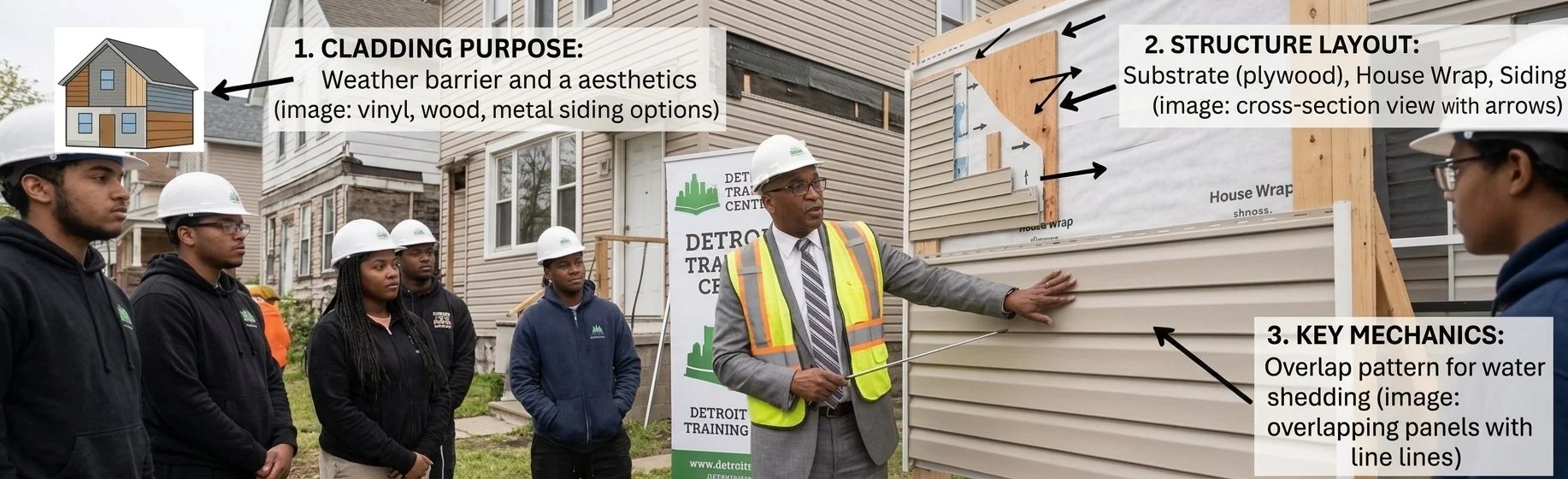
Choosing the Best Vinyl Siding for Your Home: A Guide from Detroit Training Center

Photo By: Jordan Harris

When it comes to home renovations, selecting the right vinyl siding is crucial for enhancing your home’s curb appeal, energy efficiency, and protection against the elements. But with so many options on the market, how do you choose the best vinyl siding for your specific home? Detroit Training Center’s home renovation workshops offer expert guidance, but here’s a quick guide to get you started.

1. Understand Your Home’s Architectural Style

  • Traditional Homes: If your home has a classic or colonial style, you might opt for vinyl siding that mimics natural wood or cedar shakes. These styles complement traditional architecture and add a timeless look to your home.

  • Modern Homes: For contemporary homes, smooth or sleek vinyl panels in bold colors can highlight the clean lines and minimalist aesthetic of modern architecture.

  • Historic Homes: If your home is historic, you’ll want to choose vinyl siding that can replicate the original materials while maintaining the structure’s integrity. Consider clapboard or beaded siding options for a more authentic look.

2. Consider the Climate

  • Cold Climates: In regions with harsh winters like Detroit, it’s important to choose vinyl siding that offers extra insulation to protect against cold temperatures. Insulated vinyl siding can help reduce energy costs and keep your home warmer.

  • Hot Climates: For homes in warmer areas, look for vinyl siding with UV protection to prevent fading and warping under intense sunlight. Light colors are often better at reflecting heat and keeping your home cool.

3. Evaluate Durability and Maintenance

  • Durability: Look for siding that can withstand the specific challenges of your environment, such as strong winds, moisture, or UV exposure. High-quality vinyl siding should be resistant to dents, cracks, and warping.

  • Maintenance: One of the main advantages of vinyl siding is its low maintenance. However, some types may require more upkeep than others. Smooth surfaces are easier to clean, while textured options might need more attention to avoid dirt buildup.

4. Choose the Right Color

  • Match Your Neighborhood: Consider the overall look of your neighborhood when selecting a color. Neutral tones like beige, gray, or white are versatile and timeless, while bolder colors can make your home stand out.

  • Complement Your Roof and Trim: Your siding should harmonize with your roof and trim colors. Use a color wheel to find complementary shades or consult a professional for advice on color coordination.

5. Think About Cost and Value

  • Budget: Vinyl siding comes in a wide range of prices. While it’s important to stay within your budget, don’t compromise on quality. Investing in durable, energy-efficient siding can save you money in the long run.

  • Resale Value: The right vinyl siding can increase your home’s resale value by boosting its aesthetic appeal and energy efficiency. Consider this when making your selection, especially if you plan to sell your home in the future.

6. Attend a Home Renovation Workshop

  • Get Expert Advice: Detroit Training Center offers home renovation workshops that cover everything from choosing the best materials to hands-on installation techniques. These workshops provide valuable insights and practical knowledge to help you make informed decisions.

  • Learn Installation Tips: Beyond selecting the right vinyl siding, understanding how to properly install and maintain it is crucial. Our workshops teach you the skills needed to ensure your siding lasts for years to come.

Conclusion

Selecting the best vinyl siding for your home involves considering your home’s architectural style, the local climate, and your budget. By attending Detroit Training Center’s home renovation workshops, you can gain the knowledge and skills needed to make the best choices for your home’s exterior.

Whether you’re looking to boost your home’s curb appeal, improve energy efficiency, or simply refresh its appearance, the right vinyl siding can make all the difference. Sign up for our next workshop and take the first step toward transforming your home!

Trade School vs. College: Debunking Myths and Misconceptions

he debate between attending a traditional four-year college or enrolling in a trade school is one that many high school graduates and their families face. For years, the conventional wisdom was that a college degree was the surest path to success. However, as the economy evolves and the demand for skilled labor grows, trade schools like the Detroit Training Center (DTC) are proving to be a valuable and often overlooked alternative. Let’s debunk some common myths and misconceptions about trade schools and compare them with the college experience.

Myth 1: College Degrees Guarantee Higher Earnings

One of the most pervasive myths is that a four-year college degree automatically leads to higher earnings. While it is true that college graduates can earn more on average over their lifetimes, this statistic often overlooks the fact that certain trades offer competitive, and sometimes even higher, salaries without the burden of student debt. For instance, skilled trades such as electrical work, plumbing, HVAC, and welding often lead to well-paying jobs right out of school, with opportunities for advancement and entrepreneurship.

According to data from the U.S. Bureau of Labor Statistics, the median annual wage for electricians was $60,040 in 2022, with the top 10% earning more than $99,800. Compare this with many college graduates who, after four years of study and accumulating significant student debt, start at entry-level positions with salaries that might not justify the cost of their education.

Myth 2: Trade School Is a Last Resort

Another misconception is that trade school is a fallback option for those who couldn’t make it into college. In reality, trade schools offer specialized training in high-demand fields that require a unique skill set. At DTC, for example, students receive hands-on training from industry professionals, preparing them to enter the workforce immediately upon graduation. This practical, career-focused education is increasingly recognized as a smart choice for students who want to avoid debt, start earning sooner, and secure stable employment.

Trade schools are also not just for those who are “not academically inclined.” The rigorous training programs require a solid understanding of technical concepts, problem-solving skills, and the ability to adapt to rapidly changing technologies—qualities that are equally challenging and rewarding as any college curriculum.

Myth 3: Trade School Limits Career Growth

Some people believe that attending a trade school limits one’s career growth and opportunities. This couldn’t be further from the truth. Many trades offer clear paths for advancement, including opportunities to start one’s own business. For example, a graduate from DTC’s construction program might begin as a skilled laborer but could eventually move up to a supervisory role or start their own contracting business. Moreover, many trade schools, including DTC, offer continuing education and certification programs that allow professionals to stay current with industry standards and expand their skills.

Myth 4: College Is the Only Path to Success

While college can be the right choice for many, it is not the only path to a successful career. Trade schools provide education that is directly aligned with the needs of the job market. With the rise of automation, the demand for skilled tradespeople has only increased, making trade school graduates critical to the functioning of our economy.

Furthermore, the cost of college continues to rise, leading many students to graduate with significant debt. Trade school programs are often much shorter and less expensive, allowing students to enter the workforce with little to no debt and start earning a salary sooner. This financial advantage, combined with the high demand for skilled workers, makes trade school an appealing option for many.

Conclusion: The Value of Trade Schools

The decision between trade school and college should be based on an individual’s career goals, financial situation, and personal interests. Trade schools like the Detroit Training Center provide a valuable alternative to the traditional college route, offering specialized training, quicker entry into the workforce, and less financial burden. It’s time to move beyond the outdated stereotypes and recognize the value that trade schools bring to our economy and the opportunities they offer to students.

For those considering a career in the trades, the Detroit Training Center offers a range of programs designed to equip students with the skills they need to succeed. Whether you’re looking to start a new career or enhance your current skills, DTC provides the training, support, and connections to help you achieve your goals.

For more information on the programs available at DTC, visit Detroit Training Center

The Impact of Forklift Maintenance on Workplace Safety and Efficiency

Photo by: Jordan Harris

Forklifts are quite a critical part of most locations such as warehouses, manufacturing units and distribution centres. These machines do the tasks that need a wealth of muscle power, such as transferring stocks from one position to another, inconveniencing lorries and organizing goods in high compartments. It is evident that in many companies where activities flow in a good manner, lift trucks are relied upon.


 However, like any other machine, a forklift requires consistent servicing. This isn’t just about keeping them working but more about the protection and the efficiency of the workplace. Let’s find out how maintenance and repair of the forklifts could prove to be so significant to safety as well as work production.

Why Forklift Maintenance Matters

Forklifts indeed, possess a plethora of moving parts, and these parts should work in synergy for the machine to function effectively. When overhauling the equipment, technicians often check and repair items such as brakes, steering, and tyres as part of routine maintenance. This means that service interruptions are not abrupt which could be detrimental on a busy day.


Picture this: A forklift goes haywire when you least expect it. All activities in the process will come to a halt, creating delays and more work pending. Such situations are untenable where time is of the essence for instance in warehouses, the slightest change regardless of how minor it is can have far-reaching effects. According to experts from Alto Handling, keeping up with regular maintenance allows potential problems to be spotted early and fixed during quieter times, avoiding unexpected stoppages.


Also, mechanical working and installation are more productive in using low operating costs when there is a clean-up site for the hydraulic units. When the engine, the transmission and other parts of the components are well maintained within the specified schedule, the forklift should do its work with efficiency without overworking the system or consuming unneeded energy. This implies more jobs can be performed, extended hours of service from the lift and a reduction in the companies’ fuel costs and repair expenses.

Keeping the Workplace Safe

Management and safety procedures related to lifting machines are always an essential factor in any given workplace, where forklifts can be said to play a central role. Because a forklift that has not undergone any checks is likely to cause injuries to the operators in the event of a breakdown.


For instance, where the brakes have not been checked for a long time and assumed that they should be functioning properly, then there is the possibility that the brakes would not get engaged hence the forklift would be unable to stop thereby causing accidents. Also, steering problems may restrict reachability to the controls thereby increasing the tip-over risks whenever the truck is used in tight spots. However, periodically inspecting and repairing these components is effective.


Tyres are again essential in this respect. Flat or damaged tyres reduce industrial vehicles' working efficiencies, especially in times of loading heavy weights. To avert such situations from occurring, tyres should be checked for damages and changed whenever necessary.


Hydraulic systems constitute essential parts and elements of lifting equipment such as forklifts. This particular system performs the function of lifting loads that are placed on the effectors of the system. For example, if there is a leakage or some other defects that appear in the forklift hydraulic system, lifting in this case would be faulty, which may result in accidents. Most of the time preventive maintenance will eliminate issues like this one before it becomes a real injury to a worker.

Meeting Legal Requirements

It is a common requirement in many countries to ensure an annual visit of LPGs by certified machinery lifting specialists. A company that does not perforate these rules may be subjected to penalties, legal provisions or high premiums. In some cases, the restriction could be so severe that the company is suspended from operations until they can provide operating forklifts that are safe.


In essence, by doing the scheduled operating machine maintenance checks, is a good way of preventing a legal washing machine in the company. Maintenance light as well as safety management systems are always completed with due recording since this can be reasonably verified in case of a safety audit.

Boosting Morale and Productivity

Workers can perform their duties with more comfort and assurance in the absence of a need to worry about how well-maintained their working equipment is. There is no reason for them to be concerned about equipment failure or the occurrence of accidents thus leading to work-related stress being reduced enabling completion of work efficiently.


It has been noted also that when safety and efficiency are well observed in any workplace, job satisfaction is at domain. Employees are afforded more loyalty to the organization as it takes care of their health and more importantly, such means avenues of working where the tools are reliable to perform the jobs. This will contribute to employee retention hence the organization will not be spending more on recruitment and training of fresh employees.

The Importance of Regular Maintenance

Some companies might view recurrent maintenance as an avoidable cost, however, the upside of this will be inestimably less than the downside of not doing so for the forklifts. If a breakdown of the forklift happens unexpectedly, the implication to the company will be costly maintenance and even loss of productivity while that particular machine is out of operation. Even worse, a malfunctioning forklift could make it possible for an accident to occur in the workplace which will lead to serious injuries or death to some employees and also very huge costs resulting from legal action taken against the organization.


Maintenance is required if the life of a forklift is to be extended. Standalone handling truck lifters have been designed and manufactured to last for a certain period. Without proper handling, damage will accumulate to the extent that there will be increased cases of breakdowns and the machine will have to be replaced earlier than planned.

Conclusion

Maintenance of forklifts has a great bearing on occupational health and safety and general productivity in the workplace. Making sure that the forklifts are well maintained will not only guarantee their proper functioning but also help in the prevention of accidents and even safety regulation conformance by the organization. Regular maintenance is about more than just maintaining the operability of the machines. It is all about employee health and safety. Worker productivity and therefore business operations, revenue and profitability will be positively impacted through the buy-in and support of workers. Companies can enhance their performance by ensuring that forklift maintenance is taken seriously in the organization.

Written by: Guest Post

Women in the Trades: Breaking Barriers and Building Futures at Detroit Training Center

The landscape of skilled trades is undergoing a transformation, and women are at the forefront of this change. In 2024, the presence of women in traditionally male-dominated industries like construction, welding, and mechanical trades is more prominent than ever before. This shift is not just about filling workforce gaps but is also reshaping the trades, bringing diversity, innovation, and a new wave of leadership to these vital sectors.

A Growing Presence

In recent years, more women have entered the trades, driven by the demand for skilled workers, changing societal norms, and the promise of stable, well-paying jobs. The trades have become an increasingly attractive option for women seeking a career that offers both financial independence and the opportunity to work in dynamic, hands-on environments.

Organizations like the Detroit Training Center (DTC) have been pivotal in this movement. By offering specialized training programs tailored to the needs of women, DTC has helped countless women gain the skills and certifications required to excel in trades such as heavy equipment operation, construction, and more. These programs are designed not only to teach technical skills but also to address the unique challenges women might face in the industry, such as access to mentorship, networking opportunities, and supportive work environments.

Overcoming Challenges

While progress has been made, women in the trades still face significant challenges. Stereotypes and gender biases persist, and women often have to work harder to prove their capabilities in these fields. Additionally, the lack of tailored protective gear and facilities for women on job sites can create additional hurdles.

Despite these challenges, women in the trades are breaking barriers and setting new standards. In 2024, there is a growing recognition of the need for inclusive policies and practices that support women in these industries. Companies are increasingly investing in diversity and inclusion initiatives, understanding that a diverse workforce leads to better problem-solving, innovation, and overall performance.

The Impact of Women in the Trades

The impact of women entering the trades extends beyond individual success stories. As more women take on roles in construction, welding, electrical work, and other trades, they bring fresh perspectives and approaches to the job. This diversity of thought is crucial in an industry that thrives on innovation and efficiency.

Moreover, women in the trades are serving as role models for the next generation. Their success stories inspire young girls and women to consider careers in fields they might not have previously thought possible. This ripple effect is helping to build a more diverse and robust workforce for the future.

Looking Ahead

As we move further into 2024, the role of women in the trades is only expected to grow. Educational institutions, trade organizations, and employers are increasingly recognizing the value of a diverse workforce and are actively working to create more opportunities for women. This includes everything from targeted recruitment efforts to the development of mentorship programs and the implementation of policies that ensure equal treatment and opportunities for all workers.

The future of the trades is bright, and women are playing a crucial role in shaping that future. By breaking down barriers and building successful careers in the trades, women are not only advancing their own futures but also contributing to the growth and evolution of the industry as a whole.

For more information on the Detroit Training Center and their programs, you can visit our website.

The Michigan Real Estate Market in 2024: A Golden Opportunity for Aspiring Agents

The Michigan real estate market has always been a robust and dynamic sector, reflecting the state's economic trends and the broader national economy. As we navigate through 2024, Michigan's real estate landscape presents both challenges and opportunities, making it a prime time for individuals considering a career in real estate. The market is witnessing significant transformations driven by economic factors, demographic shifts, and evolving consumer preferences. Here's why 2024 is an ideal time to become a real estate agent in Michigan.

Market Overview: A Snapshot of 2024

In 2024, Michigan's real estate market continues to grow steadily, though with some regional variations. The major urban centers, particularly Detroit, Grand Rapids, and Ann Arbor, are experiencing a resurgence in property values, driven by increased demand for residential and commercial spaces. The state's economy is benefiting from a diversified industrial base, with sectors like automotive, technology, and healthcare contributing to job growth and, consequently, housing demand.

**Residential Market**: The residential sector is particularly strong, with a noticeable increase in home buying among millennials and Gen Z. These younger demographics are looking for affordable yet modern housing options, often in urban and suburban areas. Additionally, the trend of remote work has fueled demand for properties in more scenic and rural parts of Michigan, as people seek larger homes with more space and access to nature.

**Commercial Market**: The commercial real estate market is also showing resilience. While traditional retail spaces face challenges due to e-commerce growth, industrial and office spaces are in demand, particularly those that cater to the needs of businesses in logistics, tech, and healthcare.

**Rural and Vacation Properties**: Michigan's abundant natural beauty, with its lakes and forests, continues to attract buyers interested in vacation homes and rural properties. This segment of the market is expected to remain strong as more people seek to invest in second homes or retirement properties.

Why 2024 is the Year to Become a Real Estate Agent

1. **Growing Demand for Real Estate Professionals**: With the market showing steady growth, there is an increasing need for skilled real estate agents. Buyers and sellers are looking for knowledgeable professionals who can guide them through the complexities of the market, negotiate effectively, and provide valuable insights into property investments.

2. **Favorable Economic Conditions**: Michigan's economy is on an upward trajectory, with low unemployment rates and increasing wages. These factors contribute to higher consumer confidence and a greater willingness to invest in real estate. As a real estate agent, you'll be well-positioned to capitalize on these positive economic conditions.

3. **Technological Advancements**: The real estate industry is becoming increasingly digital, with tools and platforms that make it easier for agents to connect with clients, market properties, and manage transactions. By embracing these technologies, new agents can enter the market with a competitive edge, offering modern solutions to tech-savvy buyers and sellers.

4. **Flexibility and Independence**: A career in real estate offers flexibility and the potential for independence. As an agent, you can set your own schedule, choose your clients, and build a business that aligns with your personal and financial goals. In 2024, with many people seeking better work-life balance, real estate offers a career path that accommodates this desire.

5. **Education and Training Opportunities**: Michigan offers a wealth of resources for those entering the real estate field. From pre-licensing courses to ongoing professional development, aspiring agents have access to the training they need to succeed. With the market's growth, there is also an increasing number of mentorship programs and networking opportunities that can help new agents quickly build their careers.

6. **High Earning Potential**: While real estate is a commission-based career, the earning potential can be significant, especially in a thriving market like Michigan's. With property values rising and transaction volumes increasing, successful agents have the opportunity to earn substantial incomes.

Conclusion

The Michigan real estate market in 2024 presents a wealth of opportunities for aspiring real estate agents. With strong demand, favorable economic conditions, and the potential for high earnings, it's an ideal time to start a career in this dynamic field. Whether you're interested in residential properties, commercial real estate, or rural and vacation homes, Michigan's diverse market offers something for every aspiring agent. By entering the market now, you can position yourself at the forefront of one of the most exciting and rewarding careers in the state.

Things to Consider Before Beginning a Home Renovation Project

Embarking on a home renovation project is an exciting endeavor, but it can also be overwhelming without proper planning and preparation. Whether you’re remodeling a single room or tackling a whole-house renovation, making informed decisions from the start is crucial to achieving your desired outcome. Detroit Training Center’s home renovation workshops provide hands-on guidance, but here’s a quick overview of key factors to consider before you begin your project.

1. Define Your Goals and Vision

  • Clarify Your Objectives: What do you want to achieve with your renovation? Are you looking to increase the value of your home, improve functionality, or simply refresh the aesthetic? Clearly defining your goals will help guide your decisions throughout the project.

  • Visualize the End Result: Before you start, it’s important to have a clear picture of what you want the finished space to look like. Gather inspiration from home design magazines, websites, or social media, and consider how these ideas will fit with the existing style of your home.

2. Set a Realistic Budget

  • Determine Costs: Renovation projects can quickly become expensive, so it’s essential to establish a budget early on. Consider costs for materials, labor, permits, and unexpected expenses that might arise.

  • Prioritize Spending: Identify which aspects of the renovation are most important to you and allocate your budget accordingly. It’s okay to splurge on high-impact areas like the kitchen or bathroom, but be mindful of where you can save.

  • Plan for Contingencies: Unexpected costs are common in renovations. Set aside 10-20% of your budget as a contingency fund to cover any surprises that might occur during the project.

3. Assess the Scope of the Project

  • Evaluate the Scale: Determine whether your project is a minor update or a major overhaul. Larger projects may require structural changes, electrical or plumbing work, and specialized skills that go beyond DIY efforts.

  • Consider the Impact on Daily Life: Large-scale renovations can be disruptive. If you’re renovating a kitchen or bathroom, plan for how you’ll manage without these essential spaces during the project. In some cases, you may need to consider temporary relocation.

4. Understand Local Building Codes and Permits

  • Research Regulations: Different areas have specific building codes and regulations that must be followed during renovations. Before starting, ensure that your project complies with local laws to avoid fines and delays.

  • Obtain Necessary Permits: Certain renovations, particularly those involving structural changes, plumbing, or electrical work, require permits. Check with your local building department to understand what permits are needed and apply for them in advance.

5. Choose the Right Materials

  • Quality vs. Cost: While it might be tempting to cut costs by choosing cheaper materials, investing in high-quality materials often pays off in the long run. Durable materials not only look better but also last longer and require less maintenance.

  • Match Your Home’s Style: Ensure that the materials you select align with the overall style of your home. Consider the longevity and aesthetic appeal of your choices to create a cohesive look that will stand the test of time.

6. Decide Whether to DIY or Hire Professionals

  • Evaluate Your Skills: Some renovation tasks, like painting or installing fixtures, can be handled by homeowners with the right tools and knowledge. However, more complex tasks like electrical work, plumbing, or structural changes are best left to professionals.

  • Hire Reputable Contractors: If your project requires professional help, take the time to research and hire experienced contractors. Look for licensed, insured professionals with good reviews and a solid track record of quality work.

7. Plan for the Long Term

  • Think About Future Needs: Consider how your renovation will impact your home’s functionality in the future. If you plan to stay in your home long-term, think about how your needs might change and plan your renovation accordingly.

  • Resale Value: Even if you don’t plan to sell your home soon, it’s wise to consider how your renovation choices will affect its resale value. Opt for timeless designs and neutral colors that will appeal to a wide range of buyers.

8. Attend a Home Renovation Workshop

  • Gain Expert Knowledge: Detroit Training Center offers home renovation workshops that cover everything from project planning to hands-on skills. These workshops provide valuable insights and practical knowledge to help you avoid common pitfalls and achieve professional-quality results.

  • Learn from the Best: Our workshops are led by experienced professionals who can guide you through the renovation process, helping you make informed decisions and tackle projects with confidence.

Conclusion

Before diving into a home renovation project, it’s essential to plan carefully and consider all the factors that could impact your success. From setting a realistic budget to choosing the right materials and understanding local regulations, preparation is key to a smooth and successful renovation.

Detroit Training Center’s home renovation workshops are an excellent resource for homeowners looking to enhance their skills and knowledge. Whether you’re a seasoned DIYer or a complete beginner, our workshops offer the guidance you need to tackle your next project with confidence.

Sign up for our next workshop and take the first step toward creating the home of your dreams!

The Rise of the Trade Skills Economy in Detroit: Why Now Is the Perfect Time to Learn a New Trade

In recent years, Detroit has been undergoing a significant transformation. Known historically as the heart of America's automotive industry, the city has faced its share of economic challenges. However, Detroit is now experiencing a renaissance, driven by a surge in demand for skilled trades. The trade skills economy is not just a lifeline for the city’s recovery but also presents an incredible opportunity for those looking to enter or switch careers. Here’s why now is the perfect time to learn a new trade in Detroit.

1. **Economic Resurgence and Investment**

Detroit has attracted substantial investment in infrastructure, housing, and technology over the past decade. These investments have led to a boom in construction projects, both residential and commercial. As a result, there is an increased demand for skilled labor, including electricians, plumbers, welders, and carpenters. The ongoing revitalization efforts require a steady stream of skilled tradespeople to keep up with the pace of development, creating a wealth of job opportunities for those with the right skills.

2. **Aging Workforce and Skill Shortage**

The skilled trades industry is facing a significant challenge: an aging workforce. Many seasoned tradespeople are retiring, leaving a gap in the labor market that needs to be filled. This shortage of skilled workers is driving up wages and making it easier for newcomers to enter the field. In Detroit, the demand for skilled tradespeople is outpacing supply, making it an opportune time to start a career in this sector.

3. **Affordability and Accessibility of Training**

Detroit has a rich network of community colleges, vocational schools, and apprenticeship programs that offer affordable and accessible training for those interested in learning a trade. Programs are often designed with flexibility in mind, allowing students to work while they learn. Many of these training programs partner with local industries, ensuring that students acquire skills that are directly applicable to the job market. Additionally, scholarships and financial aid are often available, making it easier for individuals to get the education they need without incurring significant debt. Online resources have always been available as well on learning the best ways to start a career in construction.

4. **Job Security and Earning Potential**

One of the most compelling reasons to consider a career in the trades is the job security it offers. Unlike some sectors that are vulnerable to economic downturns, the need for skilled tradespeople remains constant. Whether it’s maintaining infrastructure, building new homes, or upgrading electrical systems, the demand for these skills is evergreen. Moreover, tradespeople in Detroit can expect competitive wages. With experience and specialization, many tradespeople can command salaries that rival those of college graduates, often without the burden of student loans.

5. **Contributing to Detroit’s Future**

By learning a trade and joining the workforce, you are not just securing your future but also contributing to the ongoing revitalization of Detroit. Skilled tradespeople are the backbone of the city’s recovery, helping to rebuild neighborhoods, create sustainable infrastructure, and foster economic growth. This sense of purpose and community involvement can be incredibly fulfilling, providing a career that is both financially and personally rewarding.

6. **Diverse Opportunities and Specializations**

The trade skills economy is diverse, offering a wide range of career paths and specializations. From HVAC technicians to machinists, there is something for everyone. As technology evolves, new trades are emerging, such as renewable energy technicians and automation specialists. Detroit’s economy is becoming increasingly diverse, and the trades are evolving along with it. This means that those entering the field today have the opportunity to specialize in areas that align with their interests and the future demands of the market.

Conclusion

The trade skills economy in Detroit is booming, making it an ideal time to consider a career in the trades. With a strong job market, high earning potential, and the chance to contribute to the city’s revitalization, there has never been a better time to learn a new trade. Whether you are a recent high school graduate, someone looking to switch careers, or an individual seeking a stable and rewarding job, the skilled trades offer a path to success in Detroit's evolving economy.

As the city continues to rebuild and grow, the need for skilled tradespeople will only increase, ensuring that those who choose this path will have a bright future ahead. Give us a call today and let us know you’re interested in a new career at 313-221-5876.

The Importance of Learning Carpentry as a Homeowner

Owning a home comes with numerous responsibilities, and one of the most valuable skills a homeowner can develop is carpentry. While it might seem like a niche skill or a throwback to an earlier era, carpentry offers significant benefits that can make a substantial difference in the upkeep, improvement, and overall enjoyment of your home. Here’s why learning carpentry is a worthwhile investment for any homeowner.

**1. Cost Savings on Repairs and Renovations**

One of the most compelling reasons to learn carpentry is the financial savings it brings. Home repairs and renovations can be expensive, especially when hiring professionals for every small job. According to data from HomeAdvisor, the average cost of hiring a carpenter ranges from $70 to $130 per hour (source: [HomeAdvisor](https://www.homeadvisor.com/cost/). By acquiring basic carpentry skills, homeowners can tackle minor repairs, build custom furniture, or even handle larger renovation projects themselves. This not only reduces labor costs but also gives you more control over the final outcome.

**2. Enhanced Home Maintenance**

Routine maintenance is key to preserving the value of your home. Carpentry skills enable you to address issues like squeaky floors, broken cabinets, or damaged trim without waiting for a professional. Websites like [Detroit Training](https://detroittraining.com/new-blog) highlight the importance of DIY home maintenance, emphasizing that practical skills can help homeowners keep their properties in top condition. By understanding the basics of carpentry, you can prevent minor issues from escalating into costly repairs, thereby extending the lifespan of various home components.

**3. Customization and Personalization**

A fundamental aspect of homeownership is making your space uniquely yours. Carpentry allows you to customize and personalize your home in ways that store-bought solutions often can't match. Whether you’re building a custom bookshelf, crafting a new coffee table, or installing built-in storage, carpentry gives you the freedom to create pieces that reflect your personal style and fit your specific needs. As detailed in [The Family Handyman](https://www.familyhandyman.com/project_category/carpentry/), such projects not only enhance your home’s aesthetic but also add practical value.

**4. Increased Property Value**

Homes with well-executed carpentry work often command higher prices on the real estate market. Quality craftsmanship, whether it's through a newly constructed deck, refined trim work, or intricate cabinetry, can make your property stand out to potential buyers. According to [HGTV](https://www.hgtv.com/design/remodel/interior-remodel/ways-to-increase-your-homes-value), investing in skilled carpentry can yield significant returns when selling your home. By learning carpentry, you can undertake projects that boost your home’s market appeal and overall value.

**5. Personal Satisfaction and Skill Development**

Beyond the practical advantages, learning carpentry provides a deep sense of personal satisfaction. Completing a project, whether large or small, gives you a tangible result of your efforts and skills. This can be incredibly fulfilling and a great confidence booster. Furthermore, acquiring a new skill like carpentry enhances your problem-solving abilities and encourages a proactive approach to home management. As noted by [This Old House](https://www.thisoldhouse.com/skills/21018497/essential-carpentry-skills), carpentry is not just about working with wood; it's about developing a versatile skill set that can be applied in various areas of home improvement and repair.

**6. Sustainability and Environmental Benefits**

Carpentry can also contribute to a more sustainable lifestyle. By creating or repairing items yourself, you reduce the need for new, mass-produced goods, which often have a larger environmental footprint. This aligns with eco-friendly practices and promotes a sustainable way of living. Resources like [Green Building Advisor](https://www.greenbuildingadvisor.com/) offer insights into how DIY carpentry can support environmental sustainability by minimizing waste and reducing your dependence on factory-made products.

In conclusion, learning carpentry as a homeowner provides substantial benefits that go beyond just saving money. It empowers you to maintain and enhance your home, allows for greater customization, can increase property value, and fosters personal satisfaction. For those interested in acquiring these skills, resources such as [Detroit Training](https://detroittraining.com/new-blog) offer valuable insights and guidance. Embracing carpentry not only enhances your home's functionality but also enriches your experience as a homeowner.

Innovative Waste Disposal Solutions for Construction Sites

https://www.pexels.com/photo/selective-focus-photography-cement-2219024/

Construction sites are notorious for generating large volumes of waste, which, if not appropriately managed, can lead to severe environmental degradation and increased project costs. Traditional waste disposal methods, such as landfilling, are no longer viable due to their detrimental environmental impact and the increasing scarcity of landfill space.


Therefore, adopting innovative waste disposal solutions is crucial for the construction industry. Companies like Waste Removal USA provide specialized services that can significantly improve waste management practices on construction sites. For instance, their services in Raleigh waste disposal are tailored to meet the unique needs of construction projects, ensuring efficient and responsible handling of all types of waste.

Innovative Waste Disposal Solutions

On-Site Recycling

On-site recycling is another standard and very efficient method of waste disposal. It involves the collection and sorting of enumerable materials right from the construction site. Aluminum cans, glass bottles, concrete, and leftover wood and metals can be recycled rather than thrown in the dumps. The advantages of on-site recycling as a waste minimization strategy include: The volume of waste generated is reduced; Transportation costs and the environmental impact of waste disposal are also significantly reduced.


For instance, coarse aggregates from crushed concrete can be applied to produce new concrete products, while scrap metal can be recycled by melting. On-site recycling entails infrastructure development to accommodate specific waste streams and ensure that the employees understand proper categorization. Even though installing such a system at first may cost a lot of money, the advantages outweigh the disadvantages of having an on-site recycling system that is used in managing construction waste.

Advanced Sorting Technology

It is worth mentioning that the latest trends in sorting equipment, including automated waste sorting machines, have significantly impacted construction waste handling. These machines employ sensors and small mechanical claws to sort waste materials by material type, which may include metals, plastics, and organic matter. Using a sorting robotic arm can improve the overall efficiency and effectiveness of sorting processes and potentially increase recycling efficiency at construction sites.


Further, modern sorting technologies enable the quick sorting of a large amount of waste, which is essential for managing waste at large construction sites. Apart from improving waste disposal operations, this technology also assists in cutting down on labor costs and increasing project efficiency.

Waste-to-Energy Solutions

Waste-to-energy (WTE) is a process where non-recyclable waste products are converted to energy forms, including thermal energy through burning, plasma gasification, or pyrolysis. Such processes create electric energy or heat, which can be utilized in construction sites or neighboring areas. Waste-to-energy solutions should be preferred over landfilling because they contribute positively to conserving the environment. Also, they help reduce the amount of waste while generating energy.


To address WTE solutions, it is necessary to coordinate with other medical centers that are capable of receiving and processing construction waste. WTE solutions help reduce waste going to landfills and help power the country with renewable energy.

Modular Construction

Modular construction, also known as prefabrication, involves completing individual sections or modules in a factory-like setting. These components are then taken to the construction site, where they are assembled to form the final structural framework. Modular construction also considerably positively impacts the amount of waste produced at the construction site because, in the manufacturing process, the materials are measured, cut, and delivered to the site only to be installed.


Furthermore, modular construction provides improved control of building quality and minimizes the storage of materials on construction sites, which also positively affects waste management. The precision and efficiency inherent in factory settings lead to fewer material offcuts and scraps, as each piece is custom-cut to fit exact specifications. This level of accuracy is difficult to achieve in traditional construction environments, where on-site adjustments often result in material wastage.


Additionally, modular construction helps to streamline the building process by allowing multiple phases of the project to proceed simultaneously. While site preparation and foundation work are underway, modules can be manufactured in the factory. This parallel processing not only accelerates project timelines but also reduces the duration of on-site activities, thereby minimizing the potential for waste generation over extended periods.

Conclusion

New waste disposal methods are becoming popular in the construction industry, making it possible to develop sustainable and efficient structures at reduced costs. These methods work on primary waste minimization, reuse, and recycling, extended producer responsibility, green procurement, high-tech waste sorting, onsite and offsite recycling, waste-to-energy solutions, prefabrication, and modular construction. Through such tenets, construction sites can minimize their environmental effects and help achieve a sustainable future.

4 Tips for Advancing in Your Chosen Field

Guest Post by: Mian Azhar

No matter your career trajectory, you’re bound to encounter valuable opportunities to acquire new skills and assume more advanced roles. Career growth is something you will need to face; otherwise, you will end up staying where you are and getting paid the same amount.

Every person has space to grow. Whether you’re in construction or any other vocational field, you will need to advance in your journey. Considering how fast technology evolves, continuous training helps you remain employable and prepares you for higher-paying jobs.

Even if you’ve started on the bottom, your growth is inevitable if you make the right decisions and take the right actions. Here are a few tips that will light your way to becoming a master of your craft.

1. Stay hungry for learning

No one becomes a true master because your current skills will always be subject to the changes that come and go in your industry. The fact that you got your dream job is not the end-all and be-all of your career. There’s still so much more you can achieve along the way, so it’s important to stay open for learning opportunities.

Think about how machine learning could impact your industry. Mastering this tech will help enhance your current skills and equip you with the knowledge and expertise on artificial intelligence that companies may require in the future.

2. Develop a positive work ethic

You’re not working just to earn a living wage. The nature of your job could also contribute to your personal development. When you commit yourself to your role, you nurture a can-do attitude.

This fuels your drive for success even more and makes you more visible to your supervisors. Maintaining a positive work ethic also increases the chance of getting promoted. So, focus on doing well and never back down from any task that comes your way.

3. Actively look for advanced training opportunities and courses

Most supervisory roles require advanced training. To become qualified for a promotion to a higher step, it pays to take part in seminars, workshops, and other learning opportunities aligned with your specialty. You can also take up an advanced degree.

It may be time-consuming and costly, but going through the trouble of obtaining a master’s degree helps you advance further. Fortunately, you can get an advanced degree easily through available online platforms. If you’re looking to enhance your career in speech-language pathology, there’s an Online Masters in Speech Language Pathology offered by institutions like Ithaca College.

4. Be a mentor and a mentee at the same time

If it’s not possible to take up an advanced course in your field for now, you can still learn as much as you can on the job. To be an effective worker, you will have to be teachable. It pays to look for a mentor who can provide you with valuable advice and support your career progression.

Don’t be afraid of criticism because you may never grow if no one’s there to detail your mistakes. As you take this path, remember to offer yourself as a mentor to others below you. This allows you to demonstrate your mastery over your role, allowing your managers to recommend you for a promotion.

Endnote

There’s a lot more you can do to advance in your field of expertise. All you have to do is make sure you follow these tips and prepare yourself for the better things that lie ahead.

More Than Just Trucks: Diverse Career Paths with a CDL

A commercial driver’s licence (CDL) could be your key to a range of potentially lucrative career opportunities.

In each year of the last decade, there were more than 200,000 openings for heavy-duty tractor-trailer operators in the U.S. alone, but a CDL won’t limit you to being a truck driver in the logistics industry.

Explore some of the diverse career paths a CDL can open for you.

CDL: A CLOSER LOOK

Commercial vehicles are divided into three classes: Class A, Class B, and Class C. A different type of CDL is required for each class.

If you get a Class A CDL, you can operate a commercial vehicle with a gross combination weight rating (GVWR) or 26,001 or more, as long as the towed weight of the vehicle or vehicles is at least 10,000 pounds. In most cases, this would be an 18-wheeler semi-truck allowed to haul trailers such as dry van, refrigerated, tanker, flatbed, double and triple combination, and livestock trailers.

A Class B CDL allows you to drive vehicles with a GVWR of 26,001 or more, as long as the towed weight of the vehicle or vehicles is less than 10,000. Provided you have the required endorsements, you can drive vehicles such as straight trucks, city or tour buses, school buses, refrigerated trucks, small vans, and dump trucks.

With a Class C CDL, you may operate any vehicle or combination of vehicles designed to transport 16 or more passengers or feature signage for hazardous materials that do not fit the definition of Class A or Class B vehicles. These vehicles must have a GVWR of less than 26,001 pounds, and any vehicle towing a vehicle with a GVWR of 10,000 pounds or less. Examples of Class C vehicles include small trucks towing a trailer, passenger vans, and small HAZMAT trucks.

With this in mind, let’s delve into some of the diverse career paths that you can consider if you have a CDL.

COMMERCIAL TRUCK DRIVER

Whether you work as a commercial truck driver for a trucking company, a manufacturer, a retailer, or another business, the job description is more or less the same. You will transport goods around your city or within state lines.

Some commercial drivers also haul goods across the country, although this is usually the job of long-haul cargo drivers. Working as a commercial truck driver, especially if you are limited to driving within your state, means you can spend more time at home than long-haul drivers do. The average truck driver salary in the U.S. is $63,613 per year.

LONG-HAUL CARGO DRIVER

A CLD-A allows you to become a long-haul cargo driver who specializes in transporting cargo across long distances. This could mean driving across the country or even across the border into Canada.

While this does mean being away from home for long periods, long-haul cargo drivers are in high demand and typically earn higher wages than commercial truck drivers. Long-haul drivers in the U.S. earn an average salary of $71,196 per year.

DRIVING INSTRUCTOR

Getting your CDL could be your first step toward becoming a driving instructor. You will need to complete further training, but once you have those qualifications, you can instruct adults, adolescents, seniors, and people with disabilities and help them obtain their driver’s licence.

Being a driving instructor means you have flexible working hours, which allows you to work other jobs as well. For example, you could be an owner-operator and transport cargo when you’re not giving driving lessons. Driving instructors in the U.S. earn an average of $38,658 per year, although the salary range usually falls between $34,321 and $44,802.

EMERGENCY VEHICLE DRIVER

You can put your CDL to life-saving use by becoming an emergency vehicle driver. In this role, you will transport patients or medical professionals and health workers between locations in emergency situations.

In addition to using the knowledge gained when you trained for and obtained your CDL, you will need to know the local traffic laws and any other regulations relating to emergency vehicles, as well as the various safety protocols for transporting patients and medical workers. The average annual salary of emergency vehicle drivers in the U.S. depends on a variety of factors. Ambulance drivers earn an average salary of $34,988.

TOW TRUCK DRIVER

The right class of CDL can open the door to you becoming a tow truck driver. This would allow you to tow cars or trucks that have broken down or been involved in an accident to a repair facility, the owner’s home, or another location. You could work for a towing company or independently.

In addition to the driving skills needed to maneuver your vehicle as well as the vehicle you are towing without damaging other vehicles, you also need good problem-solving skills so you can figure out the best way of towing vehicles with damage that does not allow them to be towed the usual way. The average tow truck driver salary in the U.S. is $44,664.

HAZMAT DRIVER

You can combine your CDL with special certification to become a hazmat truck driver, which allows you to transport potentially hazardous materials. This can include materials that are corrosive, explosive, or flammable, as well as medical waste.

There’s no getting away from the fact that being a hazmat driver is a potentially dangerous job in which you need to use various protocols when transporting various materials. You may also have to undergo state-mandated training that addresses the transportation and management of hazardous loads and what to do when there’s a chemical spill in an accident.

However, the potential dangers of the job are compensated for by higher wages than other drivers receive. The average annual salary of hazmat truck drivers in the U.S. is $62,400 or $30 per hour, although experienced drivers can earn as much as $96,019 per year.

BUS DRIVER

If you enjoy working with people, you could use your CDL to become a bus driver. You can seek employment as a city bus driver and transport passengers around a metropolitan area or with a private company, which gives you opportunities to transport people to other cities or states. You could also be employed as a school bus driver.

Whether you work as a driver for a city’s public transportation department, for a private company, or as a school bus driver, you will fulfil an important function. It’s thanks to your hard work that people are reunited with loved ones, able to enjoy their first vacation in years, gain an education, or travel to new places where they can find new opportunities to make their dreams a reality. The average bus driver salary is $45,290 per year.

If you are looking for career opportunities, a CDL is about more than driving trucks and transporting cargo. Your CDL could pave the way to new revenue streams and experiences that you hadn’t previously considered.

Preparing Your Home for Expansion | DTC

Written by: Ainsley Lawrence

Via Pexels

Your home is one of the most valuable assets you and your family have. However, there may be times when you find the space no longer fits your needs. This doesn’t necessarily mean you need to look for a new property to purchase. Rather, undertaking a home expansion can give you the extra space you need.

That said, an expansion isn’t something you can improvise. You’ll need to take various preparatory steps before you break ground on your project. Let’s take a look at some of the key elements you’ll need to take care of.

Establish the Scope of the Project

The first preparatory step is to establish the full scope of the project. This helps you keep the project organized, on schedule, and financially viable.

Some of the aspects to focus on when defining the project’s scope should include:

●     Budget: Gain clarity on the maximum amount of money you’re willing to dedicate to the expansion project. Having a solid number and sticking to it ensures your expansion doesn’t blow your finances. Remember that your budget won’t simply be dedicated toward the materials and labor of your expansion. There will also be costs involved with permits and inspections. Additionally, you should factor in a percentage for any errors that may occur along the way.

●     Contractor consultations: It may be the case that you have the experience or expertise to take care of your expansion personally. If not, it is vital to undertake consultations with an experienced builder or contractor. They’ll be able to give you solid insights into the design options, administrative needs, costs, and potential challenges of your project. As a result, you can make more informed decisions about moving forward.

If you’re unclear whether you have a solid understanding of the scope of your project, it’s always wise to consult a professional. Even if you plan to do the construction work yourself, seeking guidance from a contractor on a purely advisory basis is still worthwhile.

Attend to the Administration

Before you get going on your expansion, there is likely to be some administration to take care of. In some instances, the contractor you’re collaborating with will take care of some of this. However, if you’re going the DIY route, you’ll have to take care of it yourself.

Some of the administration you’ll need to undertake includes:

●     Establishing the relevant building codes: There are different building codes for various home additions. These are the rules and regulations that homeowners must abide by when undertaking their projects. This applies to small additions, like sheds, as well as more involved expansions such as garages. These codes are individual to the state you live in. It’s important to research the relevant codes for your area and project so that you don’t risk fines and other penalties.

●     Seeking appropriate permits: The building codes for many projects will state that specific permits must be obtained before construction begins. Indeed, you may require different permits for various aspects of your expansion. For instance, if you have to demolish part of your property and need to park a dumpster on the street, you might require a permit for this. Be thorough in your approach and keep your permits organized in case you need to present them.

The administrative element of any expansion project can be a bit of a headache. However, admin is essential for ensuring your project maintains local construction standards. If you’re uncertain of any aspect of codes and permits, your local permit office will usually be able to provide you with guidance on what you need.

Make Safety Arrangements

Safety is paramount for any expansion project. Start by performing a risk assessment on the project. Consider the aspects of the build that could present dangers. You shouldn’t just focus on the use of tools or the potential for debris. Your family’s activities can present additional risks during construction. The more you know about the risks, the better you’re able to prepare for them.

Some considerations here include:

●     Personal protective equipment (PPE): If you’re hiring contractors, they will usually provide their own PPE. However, if you’re going the DIY route or your family is likely to be around during construction, you should invest in some safety equipment. At the most basic, this should include hard hats and dust masks. However, if you expect to be moving around in the dark during construction, high-visibility jackets may be practical, too.

●     Arrangements for children and pets: The last thing you want is to have young children and pets entering a construction site, particularly if they’re unaccompanied. It’s important to make arrangements to ensure they are supervised and kept away from hazards. If you have pets at home, it may also be sensible to set up noise reduction measures so that the noise of construction doesn’t cause undue distress.

Remember, too, that you have a responsibility to keep the general public safe during construction. You’ll need to take steps to minimize debris leaving your property. It's also sensible to take out public liability insurance to financially protect you if accidents occur.

Conclusion

Taking solid preparatory steps can help ensure your home expansion project proceeds positively. Remember, though, that there’s no “one size fits all” approach to preparation. Each project is unique in its needs, risks, and administration. Take the time to tailor your prep to suit your circumstances and, if you’re ever uncertain, consult a professional.

How to Start a Hardware Business Specializing in Building Materials

Written by Ellen Hollington

The construction industry is booming, and with the demand for new buildings and infrastructure on the rise, there has never been a better time to start a business selling building materials. As a construction professional, you may have seen opportunities in this market but have been unsure where to start or how to navigate the complexity of hardware sales.


Fortunately, our guide will assist you through the process of building a flourishing hardware business that specializes in selling building materials. From understanding your target market to sourcing high-quality products and effectively marketing your business, we'll share with you some basics. So, get ready as you learn how to form your hardware enterprise!

Steps to Take Before Forming the NEXT BIG HARDWARE COMPANY

Millennials are undertaking DIY projects to save money, especially for home improvements, which is a significant driver of growth in the hardware industry. It shows that selling hardware stores has grown immensely over the last decade. With this in mind, jumping into this venture doesn't seem a bad idea after all! As long as you have knowledge about the industry, you can turn it into a prosperous business.


Here are some essential steps to take before forming your hardware business:

Determine if the Business is Right for You

Every industry has pros and cons, and hardware sales are no exception. Before you start your hardware business, it's important to understand its intricacies and determine if it's the right fit for you. Industry trends are also changing and evolving, so you must keep up and match the pace to be relevant.


More factors to consider include:


●     Competition

●     Market demand

●     Typical costs required

●     Earning potential


These are only some elements that can affect your business if you don't know how to manage it. Once you do your research, remember to find the answers to your questions before committing to this huge endeavor.

Refine the Idea

Once you've determined what's involved in hardware businesses, you must conduct market research next. It will hone your idea as you get to know your customers, competition, and the landscape. Begin with the following:


●     Identify the opportunity to fill the market gap

●     Know the type of products you want to sell

●     Develop your price points

●     Specify your target market

●     Choose a strategic location


Once you have all the vital information, forming a strategic marketing campaign will be easier. For instance, you can use Corporate Branded Vinyl Decals in your shop, strategically placed around your store. You may also use posters and pay for social media ads to attract customers.

Choose Your Brand Name

Brainstorming for a catchy and unique brand name can be tricky. You want it to be memorable, especially since it will represent your business identity. Something short stands out and is easier to place on vinyl decals for signages and branding applications. Also, it has to be easy to pronounce and spell.


Here are some tips to consider when choosing your brand name:


●     Avoid using generic names

●     Must be relevant to your product or service offerings

●     Add "hardware" or "hardware store" for SEO purposes

●     Don't add a location in case of future expansions


These are just some tips you can implement when choosing a name for your hardware business. Once you have a name, visit the US Patent and Trademark Office website to see if they're available for registration. Don't forget to check the availability of the domain names for your future website.

Develop a Solid Business Plan

Your business plan will serve as a guide that outlines your strategy, objectives, and projected growth for the following years. A business plan will also help potential investors better understand your vision as a company. Other elements it must contain are as follows:


●     Executive summary

●     Business Overview

●     Product and services

●     Market and competitive analysis

●     Sales and marketing

●     Management team

●     Operations and financial plan

●     Appendix


Be as thorough as possible, and research properly to provide accurate and precise information. Your business plan will also experience revisions as it grows and evolves, so keep it updated. Although business plans may seem intimidating, hiring a business plan specialist to help you is ideal for those without experience.

Registering Your Business

Your location and business structure are crucial since they will determine the type of business registration you'll need. How? The requirements may vary from state to state and county to county. However, registering a business name and obtaining an EIN (Employer Identification Number) is standard in all states.


Common types of business structures:

●     LLC

●     Partnership

●     Sole Proprietorship

●     C Corporation

●     S Corporation


Most business owners prefer LLC (Limited Liability Company) since it offers many benefits, such as pass-through taxation and owners not being made liable if the business encounters legal or financial issues.

Funding Your Business

You need capital to build your business, purchase products, and pay your employees. You can consider getting a loan from banks, applying for Small Business Administration loans, financial assistance programs and grants, friends and family, crowdfunding, and personal savings. Be sure to research and develop a solid financial plan before making any substantial financial decisions.

Taxes and Licenses

If you already have your Employer Identification Number, you must decide on your tax year. Businesses operate in a calendar year (January to December) or a fiscal year, which is the 12-month period that starts at any month. It will determine your tax cycle, while your business structure determines the taxes you'll be paying.


Next is obtaining licenses and permits from your local, state, and federal governments. It will include health licenses and permits from the Occupational Safety and Health Administration (OSHA), patents, copyrights, and other intellectual properties.

Bank Account and Insurance

Opening a bank account is fundamental in managing your finances. It will make it easier for you to pay taxes and keep track of your cash flow. Separating it from your personal bank account is highly recommended to ensure you spend business funds on business-related expenses.


Insurance is also essential in protecting your assets and covering liabilities. Consult an insurance agent to know the coverage that best suits your business needs, such as property, liability, worker's compensation, etc. These will protect your business against events that can negatively impact your business.

Launch Your Hardware Business Today

The construction industry is rapidly growing, and hardware stores are needed more than ever. Ensure you source quality materials and offer value-added services, such as installation or repair services, and your hardware business will thrive. Remember to keep up with trends and continuously improve your products and services to stay competitive. With proper research, planning, and execution, you can successfully launch and grow your hardware business today!

Tips for Moving into a Developing Neighborhood

Tips for Moving into a Developing Neighborhood

Couple sitting on a couch next to a pile of moving boxes and researching tips for moving into a developing neighborhood on a laptop. Meta Description

Embark on an exciting journey of moving into a developing neighborhood with our tips for a smooth transition and thriving community life.

Keyword:
moving into a developing neighborhood

Prioritizing Health and Wellness on Job Sites

Via Unsplash

Work in construction and the trades can be very rewarding and well-paying but also dangerous. When you’re out and about working on various jobs, it can be easy to forget about the health risks that can pop up and cause physical or mental pain and strain. The key is to be proactive and avoid the issues in the first place so you can thrive at your job and work without coincidence.

There are many ways that employees and management can work together to prioritize health and wellness on job sites. The tips below can be literal lifesavers.

Be Aware Of Concerns For Each Specific Job

Every type of trade has its risks of which you should be aware. For instance, there are various precautions you should take if you work as a welder. In addition to the dangerous tools, you could also breathe in hazardous fumes that can irritate the lungs, as well as acute pneumonia. Long-term exposure can even lead to lung cancer. You would want to stay upwind when welding outside and wear a respirator to avoid the risk.

Many job sites require work to be completed near dangerous chemicals, and this is another area where safety is essential. Exposure or physical interaction with the chemicals can lead to burns, respiratory problems, and more. That’s why the Occupational Safety and Health Administration requires that chemical manufacturers evaluate the danger of the chemicals they carry and that proper signage and labels are applied so that workers know the risks. Employers need to abide by these rules, and employees need to follow the guidelines and not take shortcuts.

There are also risks that many employees don’t consider until it’s too late, including the danger the sun can pose during long hours outside. Employees should wear pants, long-sleeve shirts, and sunscreen to prevent burns or sunstroke. Another often-forgotten threat is the possibility of dehydration from not drinking enough water. Dehydration can lead to exhaustion and dizziness, which can cause headaches and confusion when you need to be focused on your work, so take breaks and drink throughout the day.

Take Care Of Your Body And Mind

Regardless of the type of work you do, it's vital always to protect your body and mind and don’t push yourself so hard that you increase the chances of an injury.

Many job sites require physical labor, and jumping into demanding physical work without the proper preparations can be especially dangerous. If you pull a muscle, you could be out of work for months or worse. So, to avoid muscle injuries, perform some kind of warm-up, be it walking around a safe area of the site or at least side-stepping in place. Avoid simply going home and sitting down after a demanding day because you’re not allowing yourself a chance to recover. Again, walking can help you to cool down. Stretches and lunges can also do the trick. In all instances, you should listen to your body, and if you feel uncomfortable or you’re in pain, take a break.

Since there’s so much going on at once on the job site, use technology to monitor your health and ensure you’re not hurting yourself. Wearable devices like smartwatches can monitor your heart rate and blood pressure and sound an alarm if you’re in dangerous territory. Take these alerts seriously and stop your task before jeopardizing your health. New technology also provides access to telehealth programs that allow you to reach out to a doctor on a computer or smartphone so you can discuss health concerns right there on the spot.

Mental Health On The Job Site

While the risk of physical injury is strong, you must also protect your mental health when you work in the trades. Many managers require long shifts and constant overtime, and that can eliminate any work-life balance that employees may have and eventually lead to burnout. Workers who are mentally exhausted are more likely to make mistakes on the job or lose focus and get injured. Trade workers also often have long commutes to work that can take them away from their families, which can cause additional stress.

If your work situation is making you feel uneasy and anxious, talk to your manager about a change in your schedule so you’re not at risk of mental anguish.

Management Needs To Be Part Of The Solution

If you’re part of the management team on a job site, it’s your duty to ensure that the staff has the tools and knowledge they need to be safe every day. That starts with proper training. In addition to helping your company stay compliant with regulations, you can save lives. Before an employee starts work at your company, have them go through a safety class where they learn about the potential hazards and who to speak to if they see a concern while on the job.

Then, before each workday begins, gather all the workers and go over the safety basics they’ll need that day. Leave plenty of time for questions and prepare to have answers. Also, provide your workers with essential safety equipment, including hard hats, eye and hearing protection, and protective clothing or vests.

Have your teams sign off on the safety protocols they’ve learned. If someone on the team violates those guidelines and puts themselves or coworkers in danger, write them up or provide another form of punishment so that the rest of the team knows how seriously your company prioritizes safety.

Conclusion

Although there’s a lot of work to be done, employees and management must avoid rushing or doing anything that puts their health at risk. Learn about the risks on every job site, and you’ll be safe and find more fulfillment in your work.

Written by Ashley Lawrence

Empowering Change: The Rise of Women in the Trade Sector

IMAGE SOURCE: Unsplash

In the past, trades such as plumbing, electricity, and welding have been primarily dominated by men. In comparison, women were consigned to housework, cooking, and raising children. However, women have become more empowered to enter these male-dominated fields due to the increasing demand for skilled workers and the immense changes in societal norms.

In this article, we will explore how women have been breaking barriers within the trade sector, the challenges they are currently encountering, and how their opportunities can be expanded.

Importance of Women in the Trade Sector

The presence of women in the trade sector is not just a matter of diversity for diversity's sake. These trailblazing women, leading the way to change, are necessary for the trade industry to make giant leaps in creating a welcoming space for women. They also bring a unique perspective that will lead to a diverse and inclusive workforce, which could lead to innovative solutions that may have been overlooked.

Factors Driving the Shift of Women in Trade

It can be challenging for women to break into traditionally male-dominated fields due to societal expectations, and a lack of education and support. Luckily, there are factors driving the change in women's role within the trade industry:

●      Educational opportunities: There are many opportunities for women to become more educated in the trade sector, so it is important to take advantage of what's currently being offered. From workshops, certification programs and vocational schooling, there are plenty of resources to choose from.

●      Economic incentives: The demand for skilled trades workers is growing rapidly, creating attractive financial incentives for individuals considering a career in the trade sector. As women recognize the potential for stable and well-paying jobs, more are willing to join the trades.

●      Mentorship and role models: Women professionals who have broken barriers and succeeded are serving as role models and mentors for aspiring tradeswomen. Their stories inspire and guide the next generation.

These factors have helped improve the representation of women in the trade sector, but there is still a long way to go before it becomes the norm instead of the exception.

Empowering Women to Pursue New Career Paths

Creating more career opportunities for women in the trade sector is a crucial step towards inclusivity and equality. It allows women at all levels to thrive in their chosen fields. Here are some key strategies that can help make this happen:

●      Inclusive trade school programs: It is essential to create trade school programs that actively encourage and support women's participation. Providing mentorship and guidance to women students can greatly boost their confidence and interest in pursuing trade careers.

●      Promoting apprenticeships: Offering apprenticeships with supportive employers can provide valuable hands-on experience and open doors to long-term career paths.

●      Raising awareness: Companies must launch campaigns in schools and communities to inform young girls about the diverse career options within the trade sector. This can also help dispel the myths and stereotypes while showcasing how trade jobs are rewarding career choices.

By helping women expand their career choices, organizations can help break the cycle of gender stereotypes and empower women to pursue careers that will help them achieve their full potential without the stress of trying to fit into societal norms.

Addressing Challenges for Women in Trade

While women are making strides in the trade industry, challenges still exist that could negatively impact their experience in competitive fields. These difficulties could include stereotypes, lack of training, and poor safety protocols in construction sites. Here's how we can address some of these challenges:

●      Customized training: Companies should offer specialized training programs in construction and other fields that address the unique challenges faced by women trades workers. Training should focus on proper techniques, equipment usage, and self-defense strategies tailored to women working in the field.

●      Tailored protective gear: Organizations should provide protective gear for women, ensuring a comfortable and secure fit. Inappropriate and unsafe gear can pose significant risks, so construction sites need to create safety protocols and provide gear that is tailored to their body shapes and sizes.

●      AI-based technologies: New technologies such as AI and robotics are being utilized for safety monitoring in industrial settings. Being knowledgeable of these new advances can help women become more efficient and reliable in the workforce.

●      Supportive work environments: It is also essential for businesses to provide supportive work environments where everyone can respect each other's boundaries and work together to maintain a safe workplace.

The rise of women in the trade sector reminds us that these changes are not just a trend. They are a revolutionary movement that can help empower women to pursue their desired industry and create a better future for everyone. It can also be a powerful way to challenge gender stereotypes and celebrate women's achievements in trade that will inspire future generations to follow their lead.