Detroit Training Center

Owning Your Own Construction Business Is A Path To Wealth

Starting a construction business in Michigan isn't just about building structures—it's one of the most reliable, battle-tested routes to building long-term generational wealth.

While many associate high net worth with tech startups or corporate management, trades and construction quietly produce thousands of self-made millionaires in the Great Lakes State. Here is why launching your own contracting or construction firm in Michigan can fast-track your path to financial freedom.

1. High Demand Built on State Infrastructure and Housing

Michigan is undergoing a massive push toward infrastructure renewal, residential development, and commercial expansion. Statewide initiatives like road construction, grid updates, and commercial developments across regions like Metro Detroit, Grand Rapids, and Lansing keep skilled contractors constantly booked.

Because demand for specialized trade work consistently outpaces the supply of licensed contractors, business owners hold significant pricing power.

2. High Margin Potential vs. Traditional Employment

As an employee in the trades, your income is capped by an hourly wage or salary. As a business owner, your income scales with project scope, efficiency, and leverage.

  • W-2 Trade Worker: Earns $25–$45/hour on average.

  • Business Owner: Charges $85–$150+/hour per billable worker, keeping the spread between labor cost and project revenue as company profit.

  • Specialized Contracts: High-demand niches—such as site preparation, concrete, electrical, and commercial HVAC—frequently see net profit margins ranging from 10% to 25%+.

3. Wealth Creation Through Business Equity

Wealth isn't just the money you bring home every month; it's the value of the assets you accumulate. A construction business generates wealth in three distinct ways:

  • Cash Flow: Reinvested profits and owner distributions build liquid assets.

  • Asset Accumulation: Heavy equipment, tools, fleet vehicles, and commercial real estate purchase options build tangible equity on the corporate balance sheet.

  • Enterprise Value: A well-managed contractor with recurring contracts, established crews, and systemized operations can eventually be sold for a multiple of earnings (SDE/EBITDA), giving you a lucrative exit option.

4. Leverage Michigan's Real Estate Market

Many successful contractors use their core business as a launching pad into real estate investing. Because you control the labor and material costs, you can buy distressed properties, renovate them far below market cost, and build a high-yielding rental portfolio or complete profitable flips across Michigan's growing suburban markets.

How to Get Started in Michigan

Get Licensed

Michigan requires residential contractors to hold a Residential Builder or Maintenance & Alterations Contractor license through LARA (Department of Licensing and Regulatory Affairs), requiring 60 hours of pre-licensure education and passing the state exam. Commercial or specialized trades (plumbing, electrical) have separate master-level licensing paths.  Check out DetroitTraining.com/mibuilders for more information. 

Structure for Asset Protection

Form an LLC or S-Corp to protect your personal assets from liability and optimize your tax strategy—allowing you to legally deduct equipment, vehicles, and operational expenses.

Master Pricing, Not Just Building

The contractors who struggle are those who underbid. Focus heavily on job costing, overhead management, and sales to protect your margins from day one.

DTC Workforce Students Start Their Own Business

For years, the story of economic opportunity in Metro Detroit revolved around getting a job. But across local job sites, neighborhoods, and commercial corridors, a new narrative has taken root: building the business.

Every year, students walk into the Detroit Training Center (DTC) seeking a fresh start. Many begin in entry-level Workforce Development Programs—learning how to run heavy equipment, pour concrete, hang drywall, or manage site safety. Yet for a growing number of graduates, mastering a trade is just Step 1.

By stacking their technical skills with DTC’s state-approved Michigan Residential Builders License Class, these trade workers are transitioning from employees into licensed contractors, company founders, and community employers.

Phase 1: Building Muscle on the Job Site

The journey typically starts in DTC’s hands-on workforce development tracks. Programs like Blight Removal, Drywall Finishing, and Heavy Equipment Operator Training give students the physical, real-world experience needed to navigate a job site safely and effectively.

In these foundational programs, students learn:

  • Tool Fluency & Safety: Earning certifications like OSHA 10/30 and learning proper equipment operation.

  • Craft Quality: Understanding trade mechanics—from framing integrity to proper fastening techniques and finish work.

  • Work Ethic & Site Dynamics: Operating inside real project deadlines alongside diverse trades.

While these core skills make graduates immediately hireable, working for someone else often caps an ambitious tradesperson’s earning potential. To take on larger contracts, pull municipal permits, and build true equity, they need legal standing under Michigan law.

Phase 2: Bridging the Gap with the 60-Hour Builder Class

In Michigan, contracting for residential projects valued at $600 or more (labor and materials combined) legally requires a Residential Builder or Maintenance & Alteration (M&A) License from LARA.

To bridge the gap between skilled worker and legal business owner, DTC students enroll in the 60-Hour Michigan Residential Builders License Course. Delivered in a webinar format designed for working adults, the curriculum shifts focus from how to swing a hammer to how to manage a enterprise:

  • Business Management & Accounting: Job costing, overhead calculations, and tax obligations.

  • Contracts & Risk Management: Drafting legally binding agreements, managing liability, and securing proper insurance.

  • Michigan Residential Code & Safety: Navigating state structural standards and MIOSHA compliance.

  • Bidding & Project Scheduling: Estimating material costs accurately to protect profit margins.

Upon passing the course's final assessment, DTC provides students with their official Certificate of Completion—unlocking eligibility to sit for the state PSI Builder Exam.

Phase 3: Launching Independent Construction Businesses

When DTC graduates combine field experience with their Residential Builders License, the trajectory of their careers transforms. Instead of collecting an hourly paycheck, they step out as independent business owners.

[Entry-Level Workforce Program] ➔ [Field Work & Skill Mastery] ➔ [60-Hour Builder Course] ➔ [LARA License] ➔ [Business Owner]

The Real-World Impact

  1. Pulling Permits: As licensed builders, graduates can pull their own residential permits, allowing them to bid directly on major home renovations, room additions, and structural repairs without working under someone else's company.

  2. Access to Capital & Prime Contracts: A state license allows new business owners to secure commercial liability insurance, obtain bank financing, and qualify for city revitalization contracts or land bank rehabilitation projects.

  3. Hiring Local Talent: Former workforce students frequently return to DTC to recruit current graduates. This creates an empowering closed-loop ecosystem: Detroiters training Detroiters, hiring Detroiters, and rebuilding Detroit neighborhoods.

Changing the Local Economic Blueprint

The transition from workforce student to licensed builder represents more than personal success—it fuels generational wealth and local economic stability. When community members own the firms performing local residential work, capital stays within the neighborhood.

By pairing hands-on trade education with the legal and operational tools needed to pass the Michigan Builder Exam, Detroit Training Center isn't just filling open job slots. They are cultivating the next generation of construction leaders, prime contractors, and local employers.

5 Star Reviews at DTC

When you are deciding where to invest your time and money into trade education, glossy brochures and website claims only go so far. What truly matters is what real students experience once they step through the doors—and when it comes to student feedback, Detroit Training Center (DTC) holds a standout 4.6 out of 5-star rating on Google Reviews.

From hands-on heavy equipment training to home renovation workshops and the 60-Hour Michigan Residential Builder’s Pre-Licensure class, hundreds of students have shared their journeys online.

Here is a look at what local students and aspiring contractors highlight most in their 5-star Google Reviews of Detroit Training Center.

1. Instructors Who Bring Real-World Field Experience

The most consistent praise across DTC’s 5-star reviews goes directly to the teaching staff. Students repeatedly point out that instructors aren't just reciting textbooks—they are seasoned industry veterans who take the time to ensure every student grasps the material.

"The instructors here actually care about whether you learn the material. They don't just lecture; they break down real job site situations, step by step, until everyone in the class understands."

Whether navigating complex span tables in the Residential Builder course or mastering joystick controls in Heavy Equipment Operation, students emphasize how patient, approachable, and knowledgeable the teaching team is.

2. Hands-On Training That Builds Real-World Confidence

Learning trade skills requires physical practice. Reviews frequently praise DTC’s practical approach to learning, whether for professional trade tracks or weekend DIY workshops.

Real Tools & Safety Gear

Students practice with professional-grade tools and industry-standard safety setups.

Applied Concepts

Theory is immediately put into practice, from drywall finishing to masonry.

Pacing for Beginners

Instructors structure lessons so complete novices never feel overwhelmed.

3. Clear Preparation for Passing Licensing Exams

For students enrolled in career-advancing tracks—like the Michigan Residential Builder License Class or Asbestos Abatement Contractor Supervisor Class—the primary goal is passing state examinations.

Multiple 5-star reviews specifically mention how well-prepared students felt when sitting for state-administered tests. Reviewers highlight:

  • Comprehensive coverage of Michigan building codes and MIOSHA regulations.

  • Practice exams that mirror the real testing environment.

  • Clear breakdowns of job costing, contract law, and business management.

4. A Welcoming and Supportive Office Environment

A trade school's culture extends beyond the workshop. Google reviewers frequently shout out the front desk, admissions, and program coordinators for making registration and enrollment seamless.

"From the minute I walked in to inquire about classes, the front office staff treated me with respect and guided me through the funding options and registration. Super professional environment."

For many students returning to school after years in the workforce, that welcoming atmosphere sets a positive tone from Day 1.

5. Life-Changing Career and Business Outcomes

Ultimately, the best reviews come from graduates whose lives transformed after completing their programs.

DTC’s 5-star Google Reviews feature stories from:

  • Graduates landing high-paying trade jobs within weeks of finishing.

  • Handypeople scaling up to launch their own licensed residential contracting firms.

  • Community members gaining the confidence to renovate their own homes or neighborhoods.

Experience the DTC Difference

With an overwhelming consensus praising knowledgeable instructors, practical hands-on training, and career-transforming results, Detroit Training Center continues to be a trusted pathway for skilled trades education in Metro Detroit.

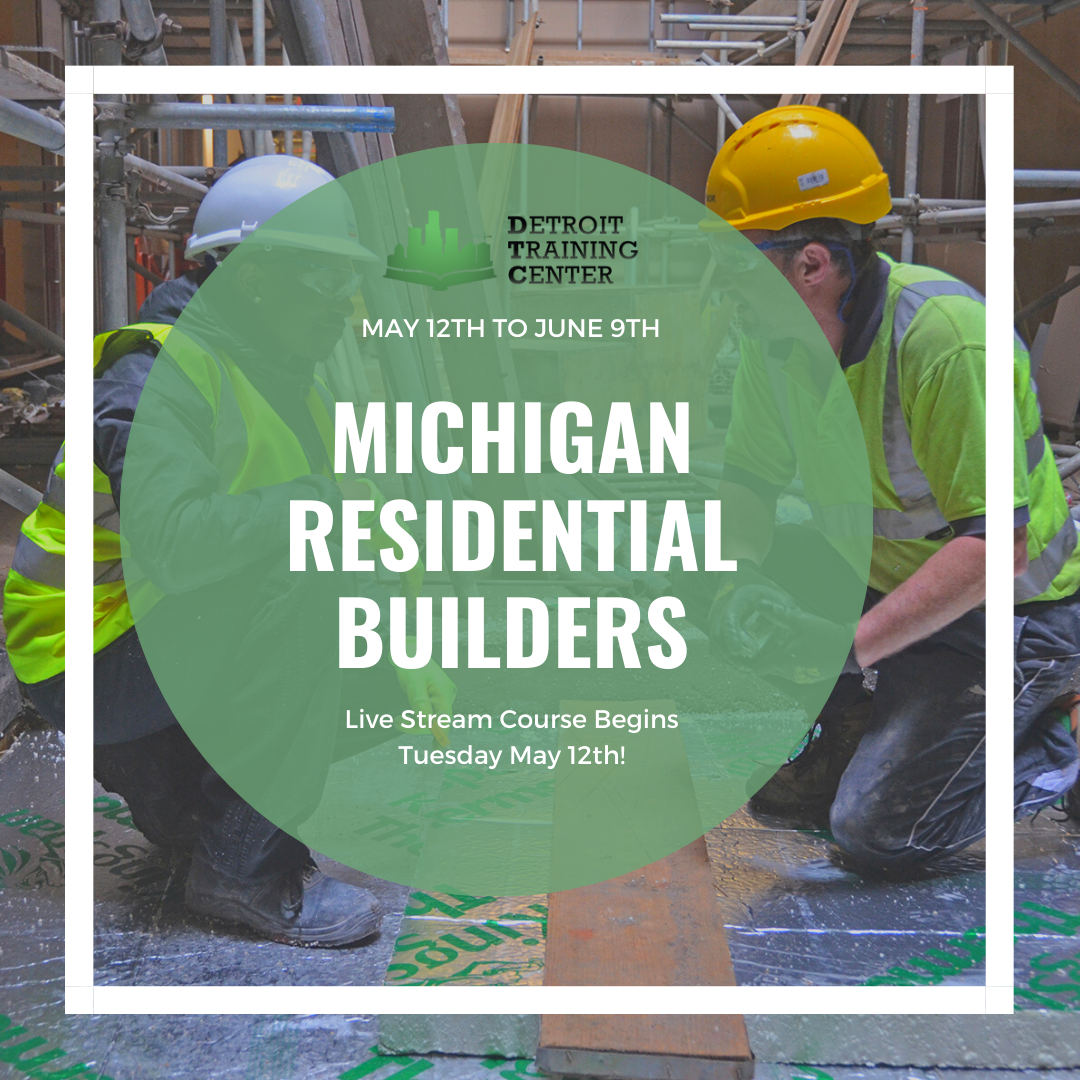
Michigan Residential Builders Live Stream Courses!

Ladies and gentlemen, we have an announcement! In response to the ongoing conflict which is the covid-19 lock down, we have switched this class to an online live stream via Google Meets with DTC instructor Ed Houchen! .  Students will be able to attend class from home via Google Meets online. We are doing everything in our power to accommodate students and ensure a great class experience in these trying times. You'll be able to make up any missed time with free access to an additional class rather it's live stream or when we open up again later down the line.

Manuals and Course Tools will also be provided electronically via Google Drive which is why you MUST HAVE A GOOGLE EMAIL TO REGISTER. We will also provide the opportunity to pick up physical copies if you’re close by, while we still follow social distancing protocols.

Call us today and get registered for the next upcoming class! Call 313-221-5876 or 313-800-4199 between 9 am and 5 pm on weekdays!

MichiganBuildersTemplate.png