
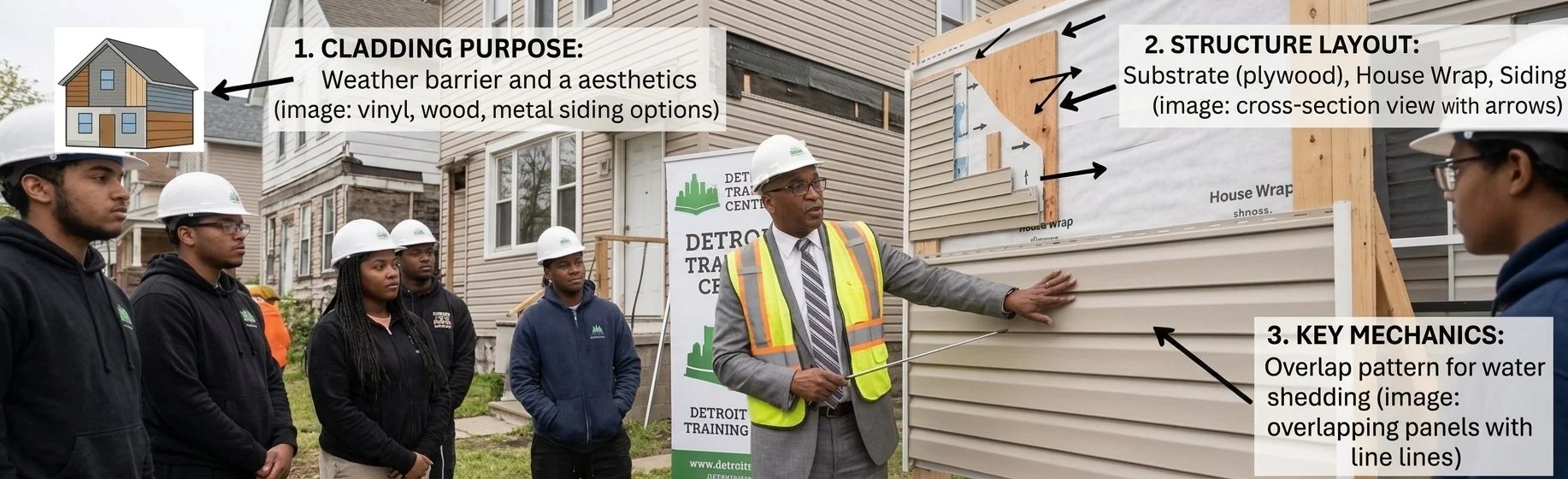
becoming a contractor in michigan

Step by Step Guide To Getting A Michigan Residential Builders License

In Michigan, any residential construction, alteration, or remodeling project valued at over $600 (labor and materials combined) legally requires a license issued by LARA (Department of Licensing and Regulatory Affairs).

Step-by-Step Licensing Process

  1. Complete Required 60 Hours of Pre-Licensure Education.

You must complete a 60-hour pre-licensure course through a LARA-approved provider prior to scheduling your exam. These courses can be taken online or in person.

  • 6 hours: Michigan Residential Code

  • 6 hours: MIOSHA Construction Safety Standards

  • 6 hours: Business Management, Estimating & Job Costing

  • 6 hours: Design & Building Science

  • 6 hours: Contracts, Liability & Risk Management

  • 6 hours: Marketing & Sales

  • 6 hours: Project Management & Scheduling

  • 18 hours: Approved elective topics

2. Submit Your LARA Application: Apply online via Accela Citizen Access portal.

Once you receive your completion certificate from your course provider, submit your residential builder license application to LARA.

  • Attach your 60-hour course completion certificate.

  • Submit a copy of your driver's license or state ID.

  • Pay the $195 initial application fee.

  • Answer questions verifying "good moral character" (background check declaration).

3. Receive Authorization to Test (ATT):LARA processing time: 2-4 weeks.

LARA reviews your application. Once approved, they will email you an Authorization to Test letter, which allows you to schedule your state exam.

4. Pass the PSI Builder Exam: Closed-book, computer-based exam.

Schedule your exam through PSI Services (the state's testing vendor) at an approved testing center in Michigan.

  • Part 1 — Business & Law: 50 questions (75 minutes)

  • Part 2 — Trade & Practice: 110 questions (180 minutes)

  • Passing Score: You must score at least 72.5% (116/160 total questions correct across both portions).

5. Receive Your License & Register Your Business: Final issuance.

Upon passing, PSI automatically sends your scores to LARA. Your hard-copy license will arrive in the mail within 1–2 weeks. Before taking on work, register your LLC or Corporation with the state and secure general liability insurance.

Total Cost Breakdown

Estimated Cost

  • 60-Hour Pre-Licensure Course

    Varies by provider (online vs. in-person classroom)

  • LARA Application Fee

    $195, Non-refundable initial license fee

  • PSI Examination Fee

    $117, Paid directly to PSI upon scheduling

  • Code Book & Study Materials

    $100 – $200, 2015 Michigan Residential Code book (optional but recommended)

Core Requirements & Ongoing Maintenance

  • Age & ID: Must be at least 18 years old with a valid state ID or Social Security Number.

  • Renewal Cycle: Licenses renew every 3 years (by May 31st).

  • Continuing Education (CE): You must complete 21 hours of CE during your first 6 years of licensure (or 3 hours per renewal period).

Owning Your Own Construction Business Is A Path To Wealth

Starting a construction business in Michigan isn't just about building structures—it's one of the most reliable, battle-tested routes to building long-term generational wealth.

While many associate high net worth with tech startups or corporate management, trades and construction quietly produce thousands of self-made millionaires in the Great Lakes State. Here is why launching your own contracting or construction firm in Michigan can fast-track your path to financial freedom.

1. High Demand Built on State Infrastructure and Housing

Michigan is undergoing a massive push toward infrastructure renewal, residential development, and commercial expansion. Statewide initiatives like road construction, grid updates, and commercial developments across regions like Metro Detroit, Grand Rapids, and Lansing keep skilled contractors constantly booked.

Because demand for specialized trade work consistently outpaces the supply of licensed contractors, business owners hold significant pricing power.

2. High Margin Potential vs. Traditional Employment

As an employee in the trades, your income is capped by an hourly wage or salary. As a business owner, your income scales with project scope, efficiency, and leverage.

  • W-2 Trade Worker: Earns $25–$45/hour on average.

  • Business Owner: Charges $85–$150+/hour per billable worker, keeping the spread between labor cost and project revenue as company profit.

  • Specialized Contracts: High-demand niches—such as site preparation, concrete, electrical, and commercial HVAC—frequently see net profit margins ranging from 10% to 25%+.

3. Wealth Creation Through Business Equity

Wealth isn't just the money you bring home every month; it's the value of the assets you accumulate. A construction business generates wealth in three distinct ways:

  • Cash Flow: Reinvested profits and owner distributions build liquid assets.

  • Asset Accumulation: Heavy equipment, tools, fleet vehicles, and commercial real estate purchase options build tangible equity on the corporate balance sheet.

  • Enterprise Value: A well-managed contractor with recurring contracts, established crews, and systemized operations can eventually be sold for a multiple of earnings (SDE/EBITDA), giving you a lucrative exit option.

4. Leverage Michigan's Real Estate Market

Many successful contractors use their core business as a launching pad into real estate investing. Because you control the labor and material costs, you can buy distressed properties, renovate them far below market cost, and build a high-yielding rental portfolio or complete profitable flips across Michigan's growing suburban markets.

How to Get Started in Michigan

  1. Get Licensed

    Michigan requires residential contractors to hold a Residential Builder or Maintenance & Alterations Contractor license through LARA (Department of Licensing and Regulatory Affairs), requiring 60 hours of pre-licensure education and passing the state exam. Commercial or specialized trades (plumbing, electrical) have separate master-level licensing paths.  Check out DetroitTraining.com/mibuilders for more information. 

  2. Structure for Asset Protection

    Form an LLC or S-Corp to protect your personal assets from liability and optimize your tax strategy—allowing you to legally deduct equipment, vehicles, and operational expenses.

  3. Master Pricing, Not Just Building

    The contractors who struggle are those who underbid. Focus heavily on job costing, overhead management, and sales to protect your margins from day one.

Why You Should Take Your Michigan Builders License Class Live via Google Meet with Detroit Training Center

If you’re looking to step up your construction career, start your own contracting business, or legally bid on residential projects over $600 in Michigan, getting your Michigan Residential Builders License is non-negotiable.

Before you can take the state exam (administered by PSI) and apply to the Department of Licensing and Regulatory Affairs (LARA), Michigan requires you to complete 60 clock hours of approved pre-licensure education.

While you could take a self-paced online video course, sitting alone in front of pre-recorded slides can make tough topics like code specs, estimating, and legal liability feel dry and overwhelming. That is why Detroit Training Center (DTC) offers its state-approved 60-hour pre-licensure course live online via Google Meet.

Here is why live virtual instruction through Detroit Training Center is the smartest way to earn your credentials and pass your state exam.

1. Live, Interactive Learning (Not Pre-Recorded Videos)

Taking a course live over Google Meet gives you the perfect middle ground between traditional classroom accountability and remote flexibility.

  • Ask Questions in Real Time: When you run into complex topics like The Michigan Residential Code, MIOSHA Safety Standards, or Job Costing, you can ask the instructor for immediate clarification.

  • Engage in Discussion: Hear questions and real-world jobsite scenarios shared by fellow classmates, giving you practical context beyond the textbook.

  • Stay Motivated: Fixed live class times keep you accountable so you actually finish your 60 hours on schedule, rather than letting self-paced videos drag on for months.

2. Schedules Built Around Working Professionals

Most people taking their builders license class are already working full-time on job sites or managing trades. DTC’s Google Meet schedule is designed to fit seamlessly around a demanding work week on evenings and weekends.

3. Zero Commute, Maximum Comfort

Traffic on I-96 or I-75 after a 9-hour physical shift on site is the last thing anyone wants.

By taking the class live on Google Meet:

  • Learn from your home, office or anywhere using your laptop or tablet.

  • Save time and money on gas and commuting.

  • Access all class materials and join sessions with just a simple link click.

4. Comprehensive Coverage of All 60 Required Hours

DTC’s curriculum covers every core topic mandated by LARA, ensuring you aren't just memorizing facts, but learning how to run a profitable, legal business:

  • Business Management, Estimating, & Job Costing

  • Design & Building Science

  • Contracts, Liability, & Risk Management

  • Marketing & Sales

  • Project Management & Scheduling

  • The Michigan Residential Code & MIOSHA Safety Standards

5. Direct Preparation for the PSI State Exam

Passing the 60-hour course is only half the battle—you also have to pass the state licensing exam administered by PSI.

DTC’s instructors focus heavily on exam readiness. The course includes a practice final exam that mirrors the style and format of the PSI exam, giving you the knowledge and confidence required to pass on your first try.

6. Flexible Payment Options & Included Materials

DTC makes starting your journey straightforward and accessible:

  • All-Inclusive Tuition: $750 total cost, which includes your official course manual.

  • Flexible Payment Terms: Get started with an initial deposit of $375, with the remaining balance due halfway through the class.

  • Official Certificate: Upon passing the end-of-course exam, you receive your official Certificate of Completion to attach to your LARA license application.

Ready to Become Your Own Boss?

Earning your Michigan Residential Builders License opens the door to higher earnings, larger projects, and true business independence.

Don't leave your license prep to passive video courses. Join an upcoming Detroit Training Center Live Google Meet Cohort and get expert instruction, real-time feedback, and total test confidence.