


Launching a construction business in Michigan requires navigating state licensing rules, legal protections, and business strategy. Following these 10 steps will help set up your company for long-term growth.
Step 1: Complete Your 60-Hour Course at Detroit Training Center
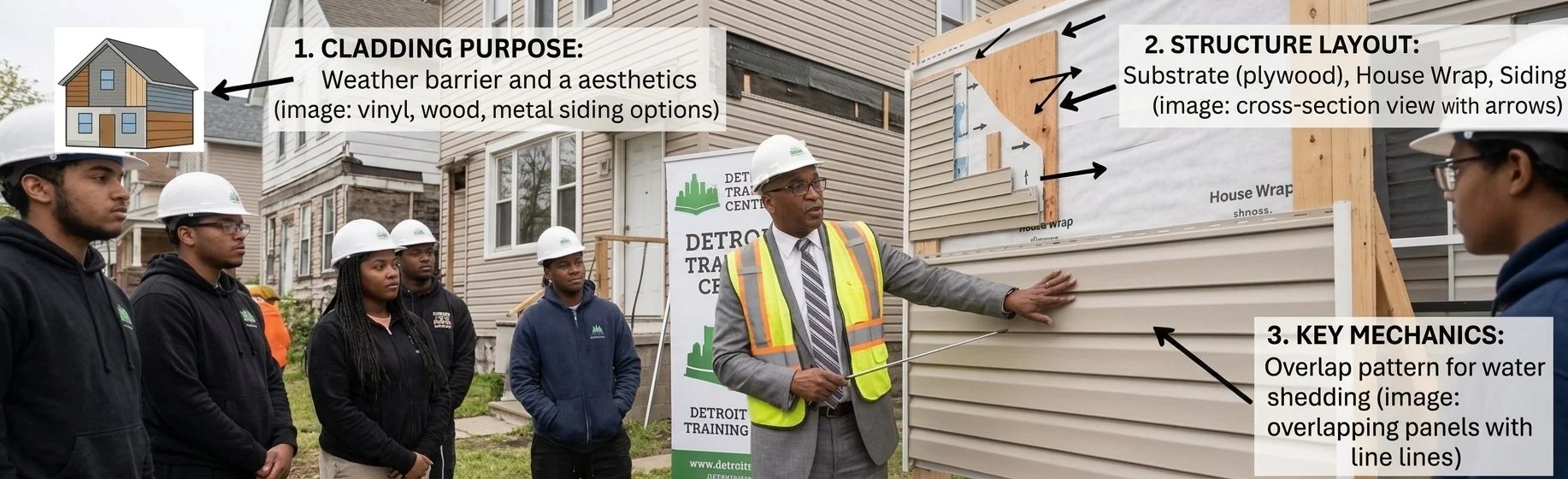
In Michigan, any residential contracting job over $600 requires a license issued by LARA. Register for the state-approved 60-Hour Michigan Residential Builders License Class at the Detroit Training Center (DTC).
Detroit Training Center
What it Covers: State building codes, MIOSHA safety guidelines, job costing, risk management, and project scheduling.
Investment: $750 total (includes course manual). DTC offers a split-payment option ($375 to start and $375 at the midpoint).
Step 2: Apply for Licensing & Pass the PSI Exam
After receiving your completion certificate from DTC:
Submit your Individual Residential Builder License Application to LARA along with a $195 fee.
Once LARA approves your application, schedule your computer-based exam via PSI Testing Services ($117 exam fee).
Detroit Training CenterPass both the Business & Law and Trade & Practice sections.
Step 3: Choose & Form Your Legal Entity
Register your business structure through the Michigan Department of Licensing and Regulatory Affairs (LARA). Forming an LLC or S-Corp protects your personal assets from workplace liability and unlocks key business tax deductions.
Step 4: Register for Federal & State Tax IDs
FEIN: Apply for a free Federal Employer Identification Number via the IRS website.
Michigan Treasury: Register with the Michigan Department of Treasury for Michigan Business Taxes (Sales Tax, Withholding, and Unemployment Insurance).
Step 5: Secure Insurance and Surety Bonds
Uninsured contractors cannot secure major commercial permits or bid on municipal contracts in cities like Detroit.
General Liability: Minimum $1,000,000 coverage recommended.
Worker’s Compensation: Required by Michigan law as soon as you hire your first employee.
Surety Bonds: Necessary for bidding on large private projects or municipal jobs.
Step 6: Set Up Dedicated Business Banking
Never mix personal and business finances. Open a business checking account using your LARA LLC approval document, FEIN, and builder's license. Establish a line of credit early to smooth out cash flow between project billing cycles.
Step 7: Tap Local Capital Resources & Incentives
Detroit contractors have access to local funding sources to help purchase equipment or secure working capital:
Detroit Development Fund (DDF): Offers specialized contractor lines of credit and microloans for Detroit-based trades.
Motor City Match: Provides cash grants of up to $100,000 for local businesses.
Michigan SBDC: Offers free financial forecasting and business plan coaching.
Step 8: Establish Job-Costing & Pricing Systems
The main reason early-stage construction businesses struggle is underbidding. Build a standardized estimating system that factor in:
Direct labor and materials costs.
Subcontractor markup.
Overhead expenses (insurance, fuel, vehicle wear, software).
Target profit margins (typically 15%–25%+ net margin).
Step 9: Pull Permits & Ensure MIOSHA Compliance
Prior to breaking ground on any project, pull proper permits through the local municipality (such as Detroit's Buildings, Safety Engineering, and Environmental Department—BSEED). Ensure all job sites strictly comply with MIOSHA regulations to avoid costly safety fines.
Step 10: Register on Local Supplier & Procurement Portals
Get certified and list your new firm on local contracting portals:
BuyDetroit: Connects local trade firms directly with major corporate and city developments.
SIGMA VSS: Register with the State of Michigan's Vendor Self Service system to bid directly on state-funded public works and infrastructure projects.
