
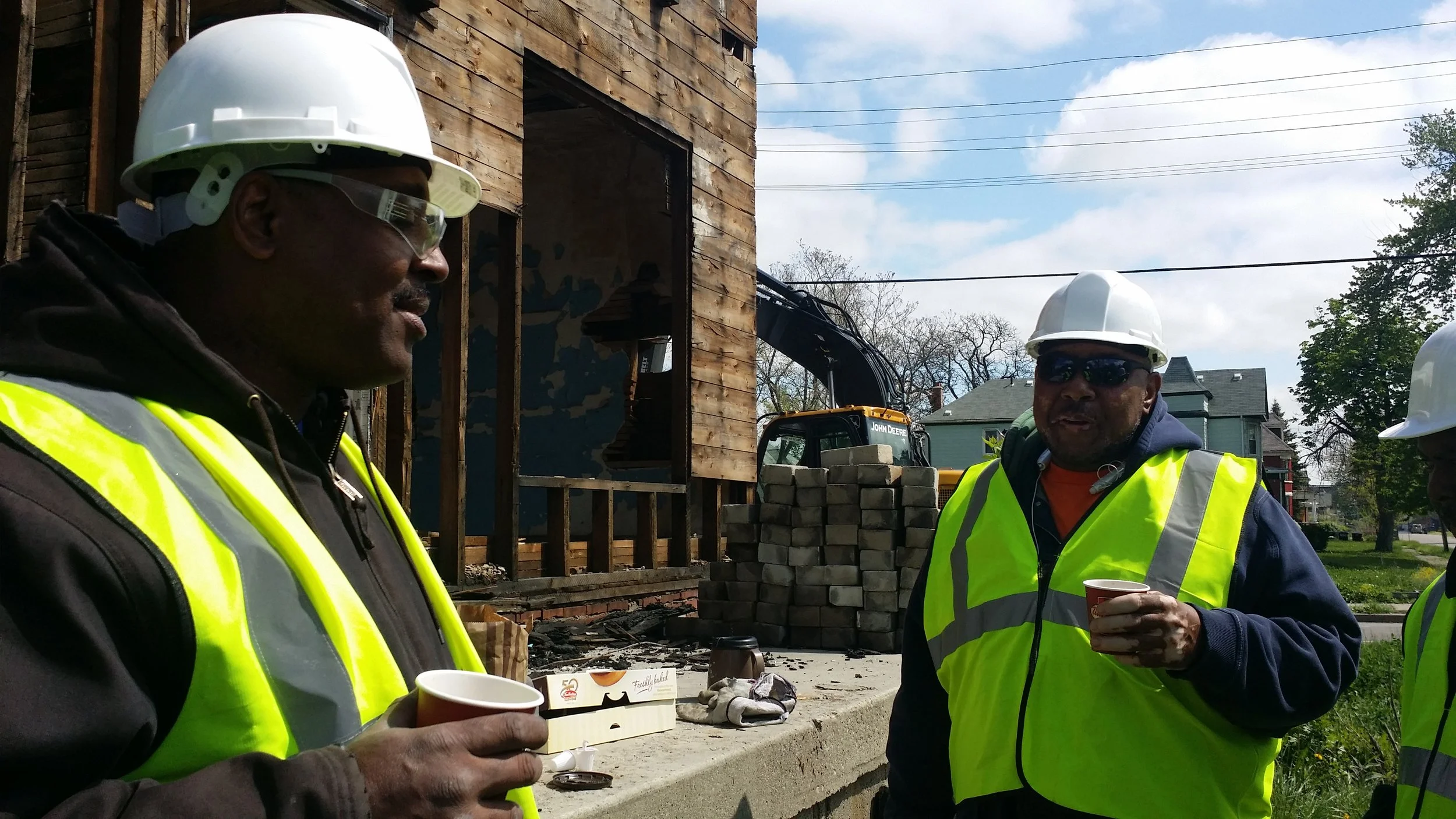
For years, the story of economic opportunity in Metro Detroit revolved around getting a job. But across local job sites, neighborhoods, and commercial corridors, a new narrative has taken root: building the business.
Every year, students walk into the Detroit Training Center (DTC) seeking a fresh start. Many begin in entry-level Workforce Development Programs—learning how to run heavy equipment, pour concrete, hang drywall, or manage site safety. Yet for a growing number of graduates, mastering a trade is just Step 1.
By stacking their technical skills with DTC’s state-approved Michigan Residential Builders License Class, these trade workers are transitioning from employees into licensed contractors, company founders, and community employers.
Phase 1: Building Muscle on the Job Site
The journey typically starts in DTC’s hands-on workforce development tracks. Programs like Blight Removal, Drywall Finishing, and Heavy Equipment Operator Training give students the physical, real-world experience needed to navigate a job site safely and effectively.
In these foundational programs, students learn:
Tool Fluency & Safety: Earning certifications like OSHA 10/30 and learning proper equipment operation.
Craft Quality: Understanding trade mechanics—from framing integrity to proper fastening techniques and finish work.
Work Ethic & Site Dynamics: Operating inside real project deadlines alongside diverse trades.
While these core skills make graduates immediately hireable, working for someone else often caps an ambitious tradesperson’s earning potential. To take on larger contracts, pull municipal permits, and build true equity, they need legal standing under Michigan law.
Phase 2: Bridging the Gap with the 60-Hour Builder Class
In Michigan, contracting for residential projects valued at $600 or more (labor and materials combined) legally requires a Residential Builder or Maintenance & Alteration (M&A) License from LARA.
To bridge the gap between skilled worker and legal business owner, DTC students enroll in the 60-Hour Michigan Residential Builders License Course. Delivered in a webinar format designed for working adults, the curriculum shifts focus from how to swing a hammer to how to manage a enterprise:
Business Management & Accounting: Job costing, overhead calculations, and tax obligations.
Contracts & Risk Management: Drafting legally binding agreements, managing liability, and securing proper insurance.
Michigan Residential Code & Safety: Navigating state structural standards and MIOSHA compliance.
Bidding & Project Scheduling: Estimating material costs accurately to protect profit margins.
Upon passing the course's final assessment, DTC provides students with their official Certificate of Completion—unlocking eligibility to sit for the state PSI Builder Exam.
Phase 3: Launching Independent Construction Businesses
When DTC graduates combine field experience with their Residential Builders License, the trajectory of their careers transforms. Instead of collecting an hourly paycheck, they step out as independent business owners.
[Entry-Level Workforce Program] ➔ [Field Work & Skill Mastery] ➔ [60-Hour Builder Course] ➔ [LARA License] ➔ [Business Owner]
The Real-World Impact
Pulling Permits: As licensed builders, graduates can pull their own residential permits, allowing them to bid directly on major home renovations, room additions, and structural repairs without working under someone else's company.
Access to Capital & Prime Contracts: A state license allows new business owners to secure commercial liability insurance, obtain bank financing, and qualify for city revitalization contracts or land bank rehabilitation projects.
Hiring Local Talent: Former workforce students frequently return to DTC to recruit current graduates. This creates an empowering closed-loop ecosystem: Detroiters training Detroiters, hiring Detroiters, and rebuilding Detroit neighborhoods.
Changing the Local Economic Blueprint
The transition from workforce student to licensed builder represents more than personal success—it fuels generational wealth and local economic stability. When community members own the firms performing local residential work, capital stays within the neighborhood.
By pairing hands-on trade education with the legal and operational tools needed to pass the Michigan Builder Exam, Detroit Training Center isn't just filling open job slots. They are cultivating the next generation of construction leaders, prime contractors, and local employers.